

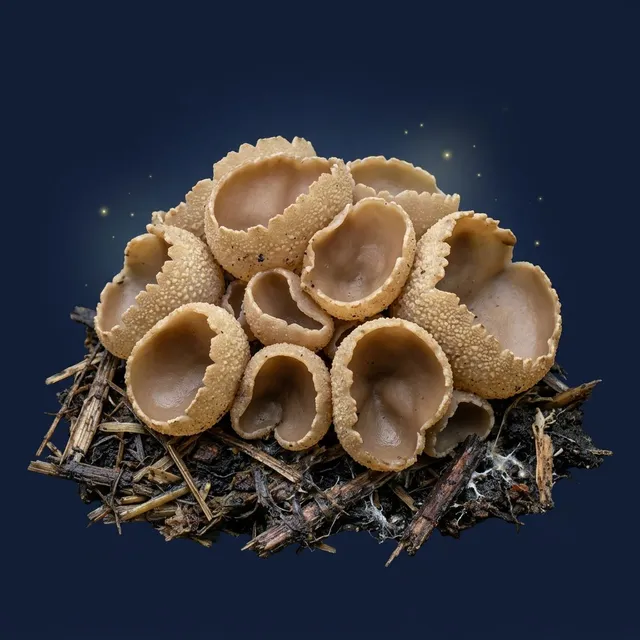
Blistered cup
Peziza vesiculosa
Polish folk names: kustrzebka
How to recognise
- Cups 2–8 cm in diameter, often squeezed together and misshapen when growing in clusters.
- Inside pale brown to light ochre, smooth, sometimes with small blisters.
- Margin rolled inwards, notched, the outer side paler and granular.
- Flesh thin, brittle, waxy.
Where and when it grows
Manure, especially horse manure, compost, rotting straw, gardens and the surroundings of stables. From spring to autumn.
JanFebMarAprMayJunJulAugSepOctNovDec
Most often under: manure, compost, straw, around stables.
Beware of the lookalike
Hare's ear. The hare's ear grows in the forest, is yellow-orange and slit down one side like an ear. The blistered cup forms closed cups on manure.
Good to know
Inedible. Some cup fungi are harmful raw, and the edibility of this species has not been confirmed, so it is better not to pick it.
Frequently asked questions
Is blistered cup edible?
No, blistered cup is inedible. Inedible. Some cup fungi are harmful raw, and the edibility of this species has not been confirmed, so it is better not to pick it.
When does blistered cup grow?
April – October. Manure, especially horse manure, compost, rotting straw, gardens and the surroundings of stables. From spring to autumn.
Blistered cup: what is it easily confused with?
Most often with the species Hare's ear. The hare's ear grows in the forest, is yellow-orange and slit down one side like an ear. The blistered cup forms closed cups on manure.