

Pig's ears
Gomphus clavatus
Polish folk names: siatkoblaszek
How to recognise
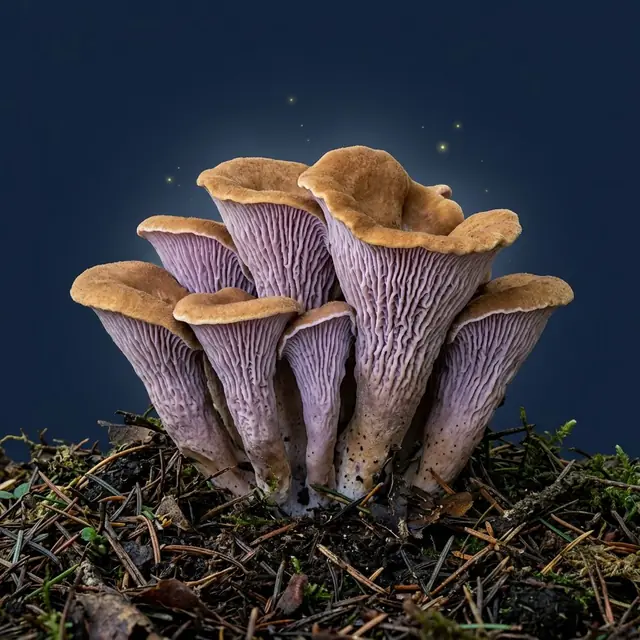
- Fruiting body club-shaped to funnel-shaped, 5–15 cm, top flat or slightly concave, ochre-brown.
- Underside covered with violet to lilac, branched ridges and veins running down the stem.
- Stem short, thick, lilac-tinged, often several fruiting bodies fuse together.
- Flesh white, firm, with a mild taste.
Where and when it grows
Old fir and spruce forests, especially in the mountains and on calcareous soils. From July to October. Very rare in Poland.
JanFebMarAprMayJunJulAugSepOctNovDec
Most often under: old fir and spruce forests, especially in the mountains and on calcareous soils.
Beware of the lookalike
Amethyst chanterelle. The amethyst chanterelle is yellow like a chanterelle, with violet scales on the cap. Pig's ears has a brownish top and a violet underside with a network of ridges.
Good to know
Edible, but in Poland it is under species protection and listed on the Red List as an endangered species, so it must not be collected. If you find it, report the site: it is valuable information for naturalists.
Frequently asked questions
Is pig's ears edible?
No, pig's ears is inedible. Edible, but in Poland it is under species protection and listed on the Red List as an endangered species, so it must not be collected. If you find it, report the site: it is valuable information for naturalists.
When does pig's ears grow?
July – October. Old fir and spruce forests, especially in the mountains and on calcareous soils. From July to October. Very rare in Poland.
Pig's ears: what is it easily confused with?
Most often with the species Amethyst chanterelle. The amethyst chanterelle is yellow like a chanterelle, with violet scales on the cap. Pig's ears has a brownish top and a violet underside with a network of ridges.