

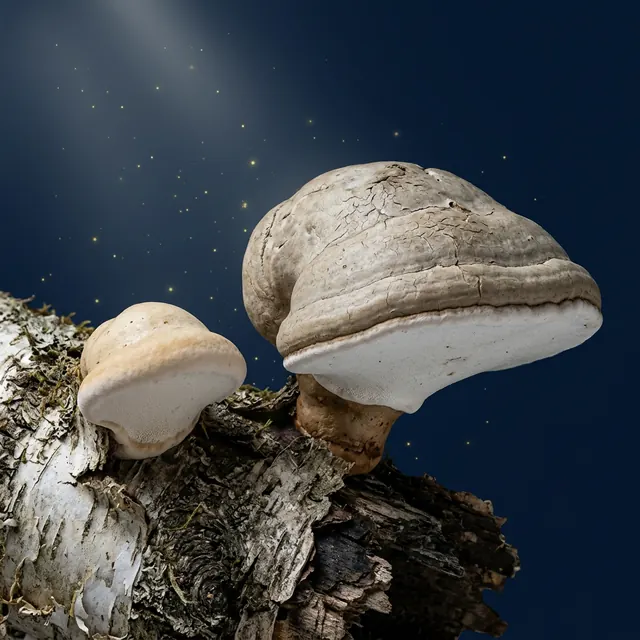
Birch polypore
Fomitopsis betulina (syn. Piptoporus betulinus)
Polish folk names: białoporek brzozowy, huba brzozowa, żagiew brzozowa, porek brzozowy
How to recognise
- Fruiting body annual, 10–30 cm, semicircular or cushion-shaped, attached at the side and narrowed at that point.
- Upper surface greyish-white to brownish, with a matt, cracking and flaking skin.
- Tubes 1.5–5 mm, white, straw-coloured in old ones; pores round, small; the tube layer is easy to separate from the flesh.
- Flesh white, compact, stringy, corky when dry; taste astringent, slightly bitter.
Up close
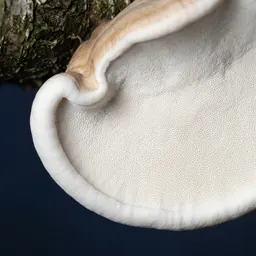 snow-white
Underside of the fruiting body
Underside snow-white, with very small pores, straw-yellow in old ones.
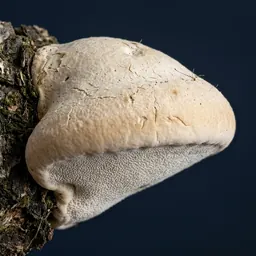 poduszka
Shape
Smooth, cushion-shaped fruiting body with a rounded edge curled downwards, without a stem.
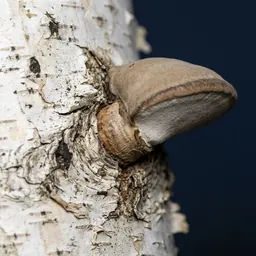 tylko brzoza
Attachment to wood
Attached sideways, with a narrow hump at the base, always on a birch trunk or branch.
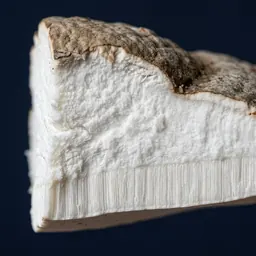 white, compact
Cross-section
Flesh white, thick, compact and fibrous; a thin layer of white tubes underneath.
The close-ups are AI illustrations. Any doubt is settled by a mycologist or herbalist, not by a photo.
Where and when it grows
Only on living and dead trunks and branches of birches, in forests, parks and by roads, often high up on the trunk. Young fruiting bodies from August to October, dead ones can be seen all year.
JanFebMarAprMayJunJulAugSepOctNovDec
Most often under: birch only.
Beware of the lookalike
Tinder fungus. The tinder fungus also grows on birch, but it is perennial, wood-hard, hoof-shaped, with grey bands and a brown-grey underside.
Feature-by-feature comparison: Birch polypore or Tinder fungus?
Good to know
Inedible. Pieces of birch polypore were found with Ötzi, the Iceman from about 5300 years ago. It contains polyporenic acids and betulinic acid, studied mainly in laboratories; it is not a confirmed medicine.
Frequently asked questions
Is birch polypore edible?
No, birch polypore is inedible. Inedible. Pieces of birch polypore were found with Ötzi, the Iceman from about 5300 years ago. It contains polyporenic acids and betulinic acid, studied mainly in laboratories; it is not a confirmed medicine.
When does birch polypore grow?
August – October. Only on living and dead trunks and branches of birches, in forests, parks and by roads, often high up on the trunk. Young fruiting bodies from August to October, dead ones can be seen all year.
Birch polypore: what is it easily confused with?
Most often with the species Tinder fungus. The tinder fungus also grows on birch, but it is perennial, wood-hard, hoof-shaped, with grey bands and a brown-grey underside.