

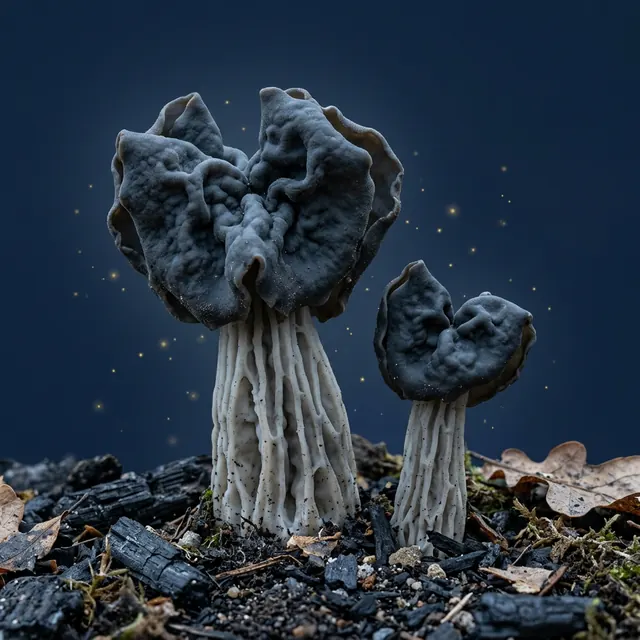
Black elfin saddle
Helvella lacunosa
How to recognise
- Cap 2–7 cm, with 2–3 irregular, folded lobes attached to the stem by their lower edge.
- Surface smooth, ash-grey, grey to almost black, often with a brownish tinge.
- Stem 3–10 cm tall and 1–3 cm thick, hollow, with longitudinal ribs and deep pits, grey to blackish.
- Flesh thin, brittle, whitish or greyish.
Up close
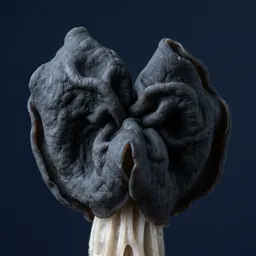 2–3 lobes
Cap
Cap made of 2–3 thin, saddle-shaped lobes, grey-black, smooth.
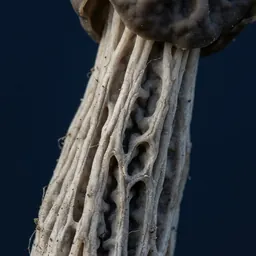 ribs and pits
Stem
Stem grey, with deep lengthwise ribs and pits, as if carved.
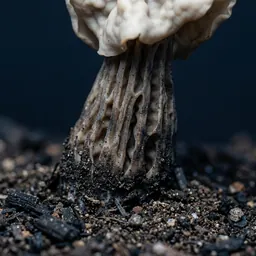 in the leaf litter
Base of the stem
Base ribbed, growing straight from the ground or from a burnt patch.
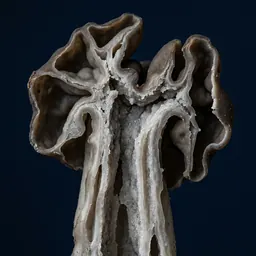 chambers in the stem
Cross-section
Stem hollow inside, with several channels; flesh thin, brittle, whitish-grey.
The close-ups are AI illustrations. Any doubt is settled by a mycologist or herbalist, not by a photo.
Where and when it grows
On the ground in forests, most often light-filled deciduous ones, less often coniferous; thickets, glades, timber yards, burnt sites. From May to November.
JanFebMarAprMayJunJulAugSepOctNovDec
Most often under: open deciduous forests, less often coniferous, burn sites.
Beware of the lookalike
False morel. The false morel is brown and folded like a brain, and has a smooth stem. The elfin saddle is grey-black, has several thin lobes and a ribbed stem.
Good to know
Polish sources list it as edible, but raw it causes stomach complaints and may contain trace amounts of monomethylhydrazine. On the Red List it has the status R. Do not collect it.
Frequently asked questions
Is black elfin saddle edible?
No, black elfin saddle is inedible. Polish sources list it as edible, but raw it causes stomach complaints and may contain trace amounts of monomethylhydrazine. On the Red List it has the status R. Do not collect it.
When does black elfin saddle grow?
May – November. On the ground in forests, most often light-filled deciduous ones, less often coniferous; thickets, glades, timber yards, burnt sites. From May to November.
Black elfin saddle: what is it easily confused with?
Most often with the species False morel. The false morel is brown and folded like a brain, and has a smooth stem. The elfin saddle is grey-black, has several thin lobes and a ribbed stem.