

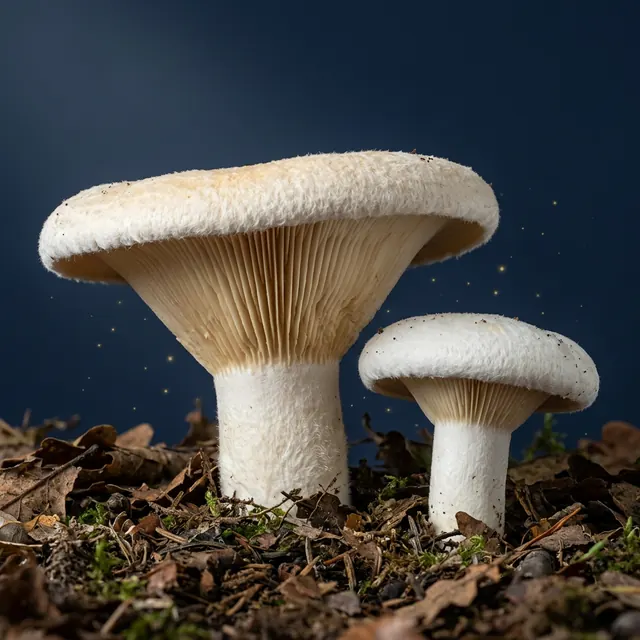
Lactifluus vellereus
Lactifluus vellereus
Polish folk names: mleczaj chrząstka, chrząszcz, biel, świnka, gruzd
How to recognise
- Cap 10–25 cm, hard, thick-fleshed, matt and suede-like, white to light ochre, funnel-shaped with age.
- Gills white, then ochre-yellow, rather sparse and thick, decurrent.
- Stem about 6 cm tall and up to 2 cm thick, short, thick, solid, the colour of the cap.
- Milk white, by itself mild or slightly bitter, but acrid together with the flesh.
Where and when it grows
Deciduous and mixed forests, most often with oaks and beeches, usually in groups. From August to mid-November; common in Poland.
JanFebMarAprMayJunJulAugSepOctNovDec
Most often under: oak, beech; less often birch, spruce.
Beware of the lookalike
Lactifluus piperatus. Biel has a smooth, non-suede cap and very crowded, thin gills.
Good to know
Inedible because of its acrid taste, fibrous. It is not considered poisonous; here and there it is eaten after boiling several times and pouring away the water.
Frequently asked questions
Is lactifluus vellereus edible?
No, lactifluus vellereus is inedible. Inedible because of its acrid taste, fibrous. It is not considered poisonous; here and there it is eaten after boiling several times and pouring away the water.
When does lactifluus vellereus grow?
August – November. Deciduous and mixed forests, most often with oaks and beeches, usually in groups. From August to mid-November; common in Poland.
Lactifluus vellereus: what is it easily confused with?
Most often with the species Lactifluus piperatus. Biel has a smooth, non-suede cap and very crowded, thin gills.