

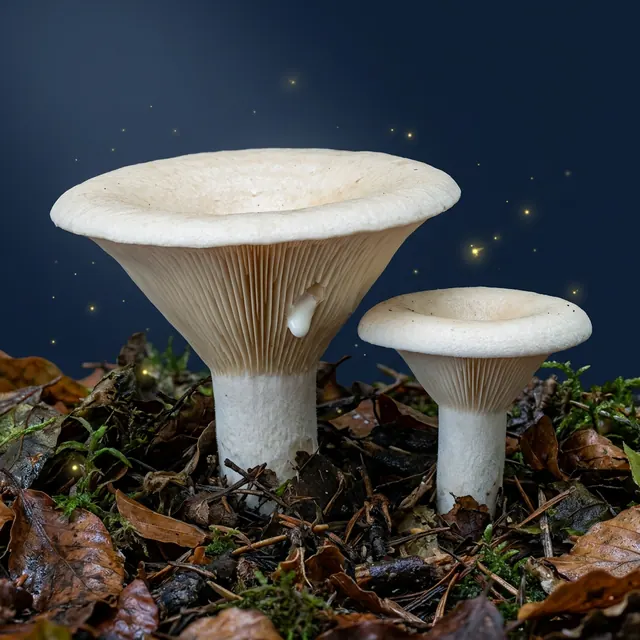
Lactifluus piperatus
Lactifluus piperatus
Polish folk names: mleczaj biel, mleczaj palący
How to recognise
- Cap 6–20 cm, dry and smooth, without sheen, white with a cream tinge, broadly funnel-shaped with age.
- Gills very crowded, thin and narrow, shortly decurrent, white, then yellowish.
- Stem 3–9 cm tall and 1–3 cm thick, white, solid, hard and smooth.
- Milk abundant, white, very acrid and burning, turns slightly yellow as it dries.
Where and when it grows
Various forests, more often deciduous, especially under beeches and oaks. From July to October, also in dry weather; common in Poland.
JanFebMarAprMayJunJulAugSepOctNovDec
Most often under: beech, oak; deciduous forests.
Beware of the lookalike
Lactifluus vellereus. Chrząstka is larger, has a felty, suede-like cap and much sparser, thicker gills.
Good to know
In Poland considered inedible because of its burning taste. In many countries it is eaten after boiling several times and pouring away the water, or salted and pickled; according to some sources it contains irritating substances.
Frequently asked questions
Is lactifluus piperatus edible?
No, lactifluus piperatus is inedible. In Poland considered inedible because of its burning taste. In many countries it is eaten after boiling several times and pouring away the water, or salted and pickled; according to some sources it contains irritating substances.
When does lactifluus piperatus grow?
July – October. Various forests, more often deciduous, especially under beeches and oaks. From July to October, also in dry weather; common in Poland.
Lactifluus piperatus: what is it easily confused with?
Most often with the species Lactifluus vellereus. Chrząstka is larger, has a felty, suede-like cap and much sparser, thicker gills.