

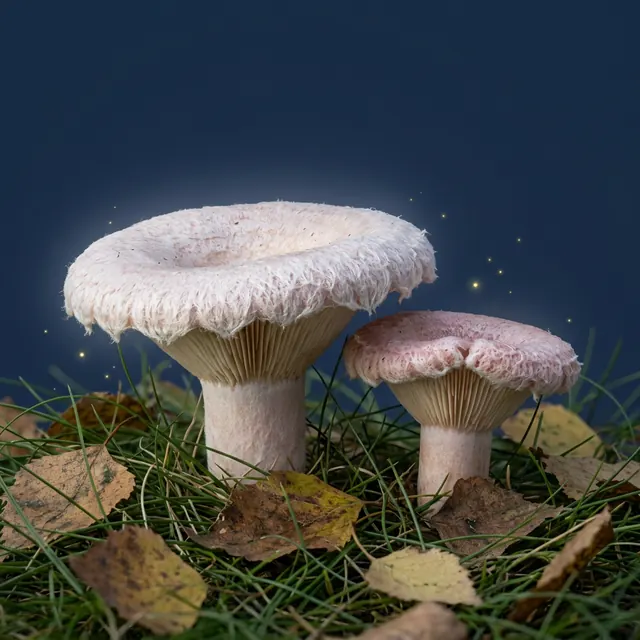
Lactarius pubescens
Lactarius pubescens
How to recognise
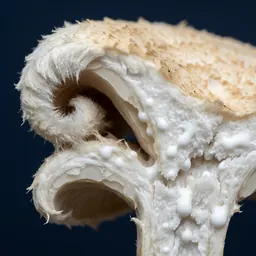
- Cap 5–12 cm, with a depression in the centre and a strongly inrolled, shaggy-woolly margin; whitish, pale pink or cream, without concentric zones.
- Gills narrow, very dense, whitish, then cream with a salmon tint.
- Stem 2–5 cm tall and 1–2 cm thick, whitish with a flesh-pink sheen, hollow.
- Milk white, unchanging, strongly burning to the taste.
Up close
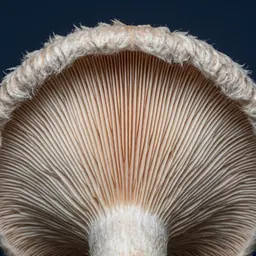 crowded gills
Underside of the cap
Gills narrow and very crowded, whitish to cream with a salmon tinge.
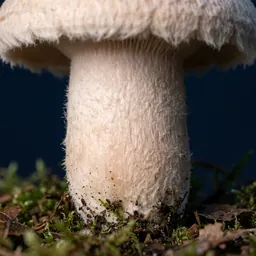 short, pale
Stem
Short, whitish stem with a pink sheen, hollow inside.
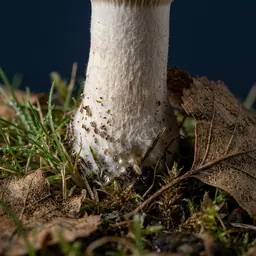 w trawie
Base of the stem
Stem narrowed at the ground; grows in grass under birches.
 burning latex
Cross-section
Flesh white, brittle; white, unchanging, very burning latex flows out.
The close-ups are AI illustrations. Any doubt is settled by a mycologist or herbalist, not by a photo.
Where and when it grows
Under birches in deciduous forests, parks, in grass, on peat bogs. From August to November; not rare in Poland.
JanFebMarAprMayJunJulAugSepOctNovDec
Most often under: brzoza.
Beware of the lookalike
Woolly milkcap. The woolly milkcap has a more strongly pink cap with distinct concentric zones. Omszony is paler and without zones. Both irritate the digestive tract.
Good to know
In Russia it is eaten after repeated soaking, parboiling and pickling. Without such preparation it irritates the digestive tract, which is why the Atlas marks it as poisonous.
Frequently asked questions
Is lactarius pubescens edible?
Nie. This mushroom is poisonous. Irritant substances (probably resinous) in raw or poorly prepared fruiting bodies. Symptoms: nausea, vomiting, diarrhoea.
When does lactarius pubescens grow?
August – November. Under birches in deciduous forests, parks, in grass, on peat bogs. From August to November; not rare in Poland.
Lactarius pubescens: what is it easily confused with?
Most often with the species Woolly milkcap. The woolly milkcap has a more strongly pink cap with distinct concentric zones. Omszony is paler and without zones. Both irritate the digestive tract.