

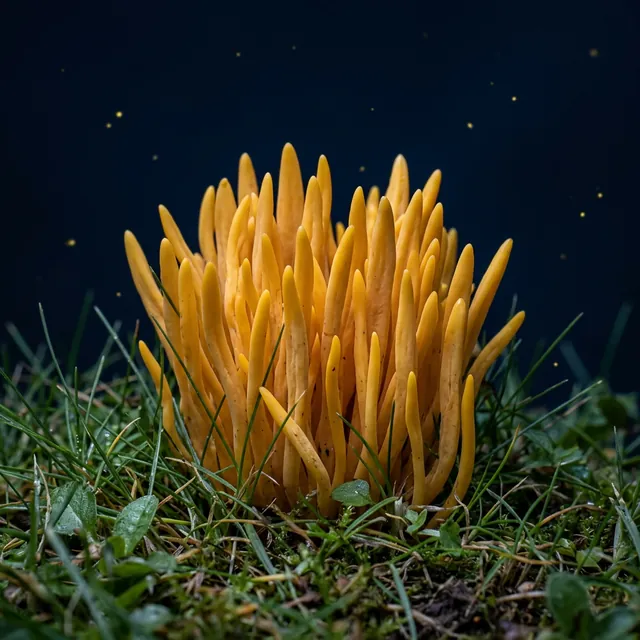
Golden spindles
Clavulinopsis fusiformis
Polish folk names: goździeniowiec wrzecionowaty, goździeniec żółty, palczak żółty
How to recognise
- Fruiting bodies in dense clusters of several to a dozen or more “fingers”, each 3–10 cm tall and 2–5 mm thick.
- Fingers golden-yellow to orange-yellow, spindle-shaped, often flattened and furrowed.
- Tips pointed, sometimes slightly darkening; base paler and compact.
- Flesh brittle, without a distinct smell or taste.
Up close
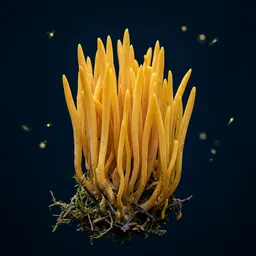 many from one base
Cluster of fingers
The fingers grow together in a compact cluster from one base, not singly.
 golden-yellow
Colour
The whole fruiting bodies are golden-yellow, without red or white tips.
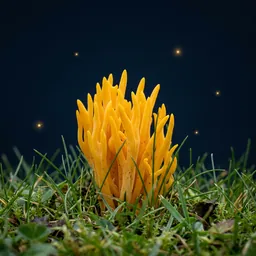 meadow, grassland
Where it comes from
It grows straight out of grassy ground, not from wood and not from moss under trees.
The close-ups are AI illustrations. Any doubt is settled by a mycologist or herbalist, not by a photo.
Where and when it grows
Meadows, pastures, grassy forest edges, paths and glades in deciduous and coniferous forests. Fruiting bodies from summer to late autumn.
JanFebMarAprMayJunJulAugSepOctNovDec
Most often under: meadows, grasslands, grassy forest edges, paths and tracks in forests (not under a specific tree).
Beware of the lookalike
Yellow club. Goździeniowiec miodowy grows singly or in a loose group and is usually shorter and less rigid. Golden spindles form a compact tuft of many fingers from one base.
Good to know
A small, extremely decorative mushroom. It is not classified as poisonous, but it has no culinary value either: the flesh is thin and unremarkable. Similar species can be slightly tricky to identify, so do not collect it to eat.
Frequently asked questions
Is golden spindles edible?
No, golden spindles is inedible. A small, extremely decorative mushroom. It is not classified as poisonous, but it has no culinary value either: the flesh is thin and unremarkable. Similar species can be slightly tricky to identify, so do not collect it to eat.
When does golden spindles grow?
July – November. Meadows, pastures, grassy forest edges, paths and glades in deciduous and coniferous forests. Fruiting bodies from summer to late autumn.
Golden spindles: what is it easily confused with?
Most often with the species Yellow club. Goździeniowiec miodowy grows singly or in a loose group and is usually shorter and less rigid. Golden spindles form a compact tuft of many fingers from one base.