

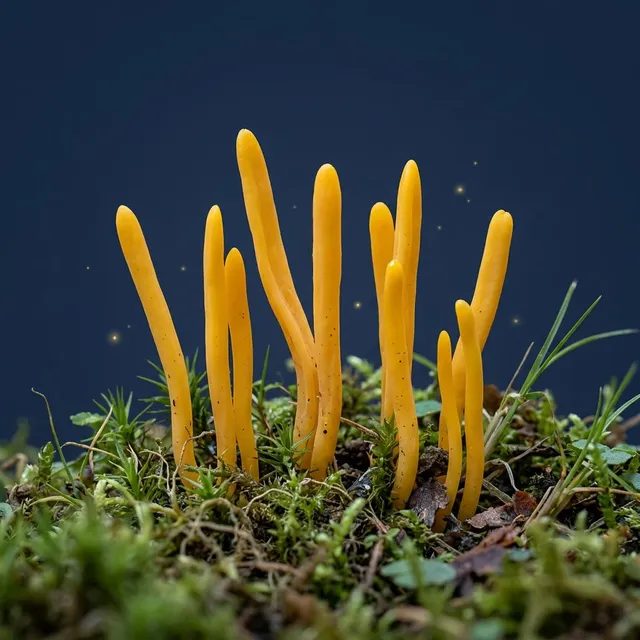
Yellow club
Clavulinopsis helvola
Polish folk names: goździeniowiec, goździeniowiec żółtawy
How to recognise
- Fruiting body shaped like a thin club or finger, 2–6 cm tall and 1–4 mm thick.
- Bright yellow to orange-yellow, paler at the base.
- Usually unbranched, sometimes with a shallow groove along its length.
- Grows singly or in small groups among grasses and mosses.
Where and when it grows
Unlimed meadows and grasslands that have not been fertilised for a long time, grassy forest edges, roadsides. From August to November.
JanFebMarAprMayJunJulAugSepOctNovDec
Most often under: meadows, grasslands, grassy forest edges.
Beware of the lookalike
Lemon coral fungus. A coral fungus forms a large, densely branched “bush” on a thick trunk. Clavulinopsis has thin, usually unbranched fingers.
Good to know
Inedible species: small, fibrous and of no culinary value. Such mushrooms grow in old, unfertilised meadows, so they are a good sign for nature.
Frequently asked questions
Is yellow club edible?
No, yellow club is inedible. Inedible species: small, fibrous and of no culinary value. Such mushrooms grow in old, unfertilised meadows, so they are a good sign for nature.
When does yellow club grow?
August – November. Unlimed meadows and grasslands that have not been fertilised for a long time, grassy forest edges, roadsides. From August to November.
Yellow club: what is it easily confused with?
Most often with the species Lemon coral fungus. A coral fungus forms a large, densely branched “bush” on a thick trunk. Clavulinopsis has thin, usually unbranched fingers.