

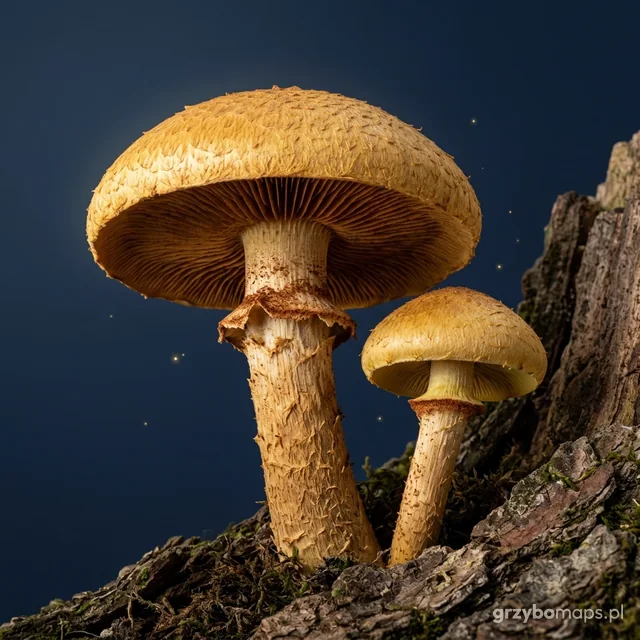
Spectacular rustgill
Gymnopilus junonius
How to recognise
- Cap 5–15 cm (exceptionally more), golden yellow to orange-brown, dry, finely fibrous.
- Gills yellow, later rusty brown; spore print rusty.
- Stem thick (1–3 cm), often swollen at the base, with a membranous ring that darkens from the spores.
- Flesh yellow, firm, very bitter; grows in clusters on wood.
Up close
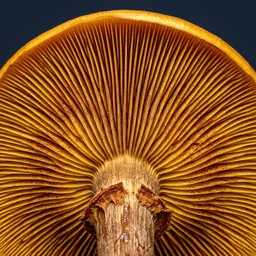 rdzawe blaszki
Underside of the cap
Gills yellow, then rusty-brown.
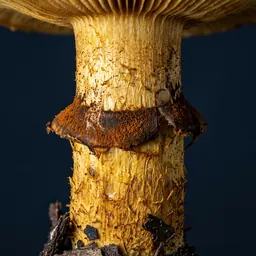 ring
Stem
Stem thick with a membranous ring that darkens from the spores.
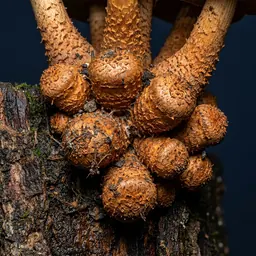 clumps on wood
Base of the stem
Base swollen; grows in clumps on wood.
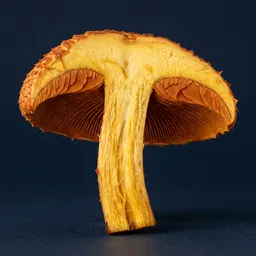 yellow, bitter
Cross-section
Flesh yellow, firm, very bitter.
The close-ups are AI illustrations. Any doubt is settled by a mycologist or herbalist, not by a photo.
Where and when it grows
Forests, parks and avenues, at the base of living and dead deciduous trees, on stumps and roots. From summer to late autumn.
JanFebMarAprMayJunJulAugSepOctNovDec
Most often under: oak, beech, other deciduous trees, more rarely conifers (trunks, stumps, roots).
Beware of the lookalike
Sulphur tuft. The sulphur tuft is smaller, sulphur-yellow, has greenish, then violet-black gills and no distinct ring; the rustgill has rusty gills, spore print and a ring.
Where in Poland
Most records in the GBIF database: łódzkie, mazowieckie, zachodniopomorskie, wielkopolskie, dolnośląskie.
Frequently asked questions
Is spectacular rustgill edible?
Nie. This mushroom is poisonous. Inedible, bitter, regarded as poisonous (neurotoxic compounds). Psilocybin has been detected in Japanese populations, but it has usually not been found in European specimens. Nausea, vomiting and disturbances of consciousness are possible.
When does spectacular rustgill grow?
July – November. Forests, parks and avenues, at the base of living and dead deciduous trees, on stumps and roots. From summer to late autumn.
Spectacular rustgill: what is it easily confused with?
Most often with the species Sulphur tuft. The sulphur tuft is smaller, sulphur-yellow, has greenish, then violet-black gills and no distinct ring; the rustgill has rusty gills, spore print and a ring.
Where in Poland does spectacular rustgill grow?
Most records (GBIF): łódzkie, mazowieckie, zachodniopomorskie, wielkopolskie, dolnośląskie. Most often under: oak, beech, other deciduous trees, more rarely conifers (trunks, stumps, roots).