

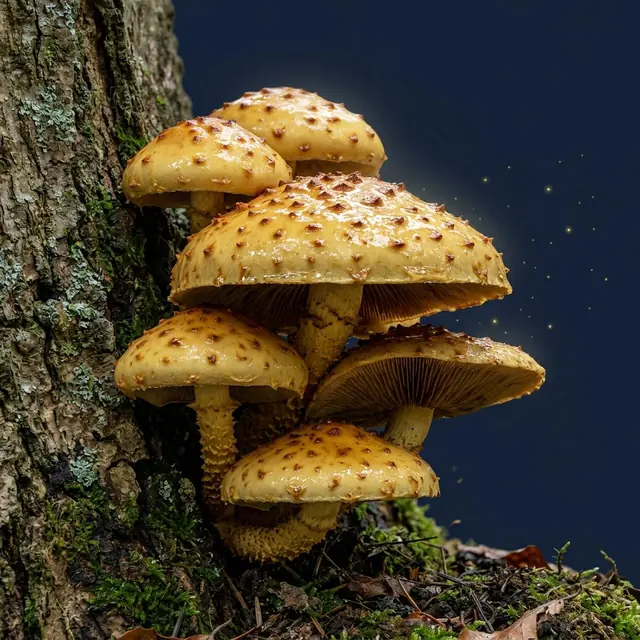
Golden scalycap
Pholiota aurivella
Polish folk names: łuszczak złotawy, łuszczak złotorunny
How to recognise
- Cap 5–12 cm, golden yellow to rusty yellow, strongly slimy in damp weather.
- Darker brown scales on the cap that lie flat and are easily washed off by rain.
- Gills yellowish, then rusty brown from the spores.
- Stem yellowish, scaly in the lower part; a faint ring zone remains from the veil.
Where and when it grows
On trunks of living and dying deciduous trees, often high above the ground: beeches, willows, poplars, apple trees. From August to November.
JanFebMarAprMayJunJulAugSepOctNovDec
Most often under: living and dying deciduous trees: beeches, willows, poplars, apple trees.
Beware of the lookalike
Shaggy scalycap. The shaggy scalycap has a dry cap with spreading, upturned scales and usually grows at the base of the trunk. The golden scalycap has a slimy cap with flat-lying scales.
Good to know
Inedible. The fungus is a parasite on trees and causes white rot of the wood. Mycologists argue about the limits of this species, so different atlases describe it slightly differently.
Frequently asked questions
Is golden scalycap edible?
No, golden scalycap is inedible. Inedible. The fungus is a parasite on trees and causes white rot of the wood. Mycologists argue about the limits of this species, so different atlases describe it slightly differently.
When does golden scalycap grow?
August – November. On trunks of living and dying deciduous trees, often high above the ground: beeches, willows, poplars, apple trees. From August to November.
Golden scalycap: what is it easily confused with?
Most often with the species Shaggy scalycap. The shaggy scalycap has a dry cap with spreading, upturned scales and usually grows at the base of the trunk. The golden scalycap has a slimy cap with flat-lying scales.