

Bay cup
Peziza badia (syn. Legaliana badia)
Polish folk names: kustrzebka
How to recognise
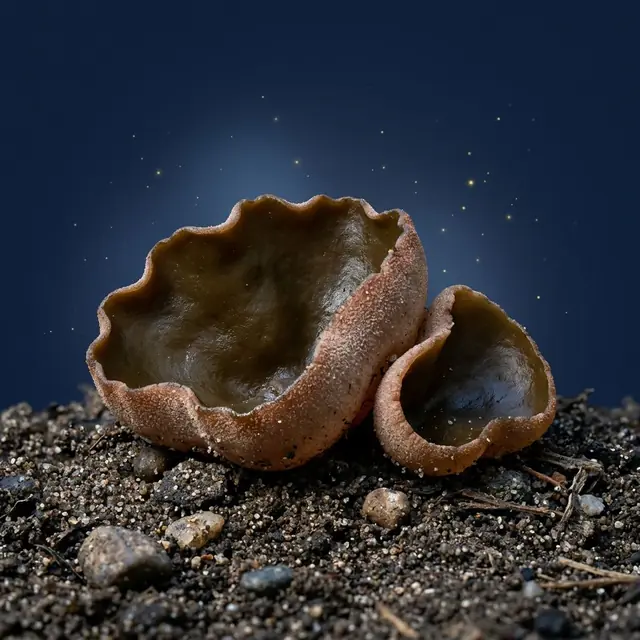
- Cups 2–8 cm, often irregular and wavy when growing in groups.
- Inside dark brown with an olive tinge, smooth.
- Outside lighter, reddish-brown, finely granular.
- No stem, flesh thin and brittle, without milk.
Where and when it grows
Bare, sandy and clayey places in coniferous and deciduous forests: path edges, banks, ditches. From June to October.
JanFebMarAprMayJunJulAugSepOctNovDec
Most often under: bare, sandy or clayey places in forests, banks, path edges.
Beware of the lookalike
Blistered cup. The blistered cup is paler, pale brown, and grows on dung. The bay cup is dark and grows on bare soil in the forest.
Good to know
Harmful raw. It is sometimes eaten after long cooking, but it can only be told apart from other cup fungi with certainty under a microscope, and not all of them are safe. Better not to pick it.
Frequently asked questions
Is bay cup edible?
No, bay cup is inedible. Harmful raw. It is sometimes eaten after long cooking, but it can only be told apart from other cup fungi with certainty under a microscope, and not all of them are safe. Better not to pick it.
When does bay cup grow?
June – October. Bare, sandy and clayey places in coniferous and deciduous forests: path edges, banks, ditches. From June to October.
Bay cup: what is it easily confused with?
Most often with the species Blistered cup. The blistered cup is paler, pale brown, and grows on dung. The bay cup is dark and grows on bare soil in the forest.