

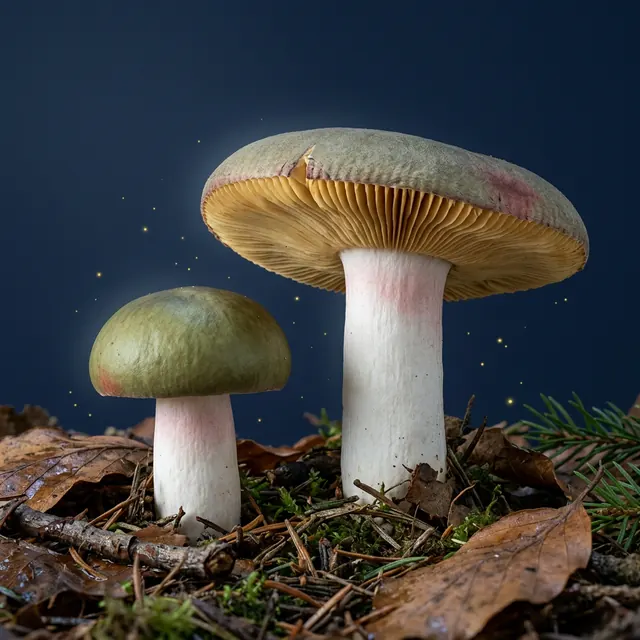
Russula olivacea
Russula olivacea
How to recognise
- Cap up to 12 cm, sometimes up to 20 cm, matt, as if suede, olive to grey-olive, sometimes with a carmine bloom near the margin.
- Gills thick, 4–10 mm wide, cream with an ochre tint; spore print ochre.
- Stem 4–10 cm tall and 1–2 (4) cm thick, white, flushed pink in the upper part.
- Flesh thick, white, pale beige when cut; taste and smell indistinct.
Up close
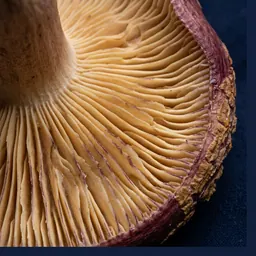 ochrowe blaszki
Underside of the cap
Gills thick, fairly distant, cream with an ochre tinge, edges sometimes purple.
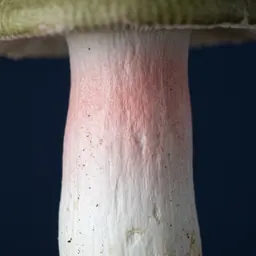 pink top
Stem
White stem, tinged pink in the upper part.
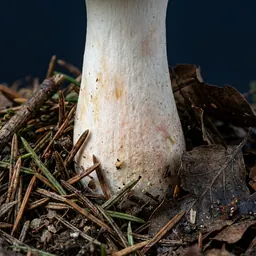 narrowed
Base of the stem
Stem slightly narrowed at the base, solid, later cottony.
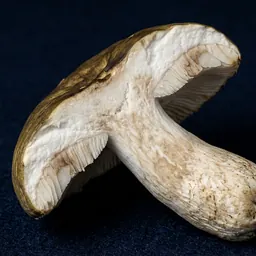 turns beige
Cross-section
Flesh white, thick, quickly pale beige when cut; the taste is mild, but the mushroom is poisonous.
The close-ups are AI illustrations. Any doubt is settled by a mycologist or herbalist, not by a photo.
Where and when it grows
Deciduous and coniferous forests, mainly under spruces and beeches, in groups. From June to October; common in Poland.
JanFebMarAprMayJunJulAugSepOctNovDec
Most often under: spruce, beech, fir.
Beware of the lookalike
Gołąbek lepki. Gołąbek lepki is sometimes confused with it; it has a shiny, purple to blood-red cap.
Good to know
An important exception to the rule that mild-tasting russulas are edible. Formerly given as edible (some atlases still say so), but serious disorders after eating it have been recorded several times.
Frequently asked questions
Is russula olivacea edible?
Nie. This mushroom is poisonous. Toxin unknown. Gastrointestinal disorders recorded after eating it.
When does russula olivacea grow?
June – October. Deciduous and coniferous forests, mainly under spruces and beeches, in groups. From June to October; common in Poland.
Russula olivacea: what is it easily confused with?
Most often with the species Gołąbek lepki. Gołąbek lepki is sometimes confused with it; it has a shiny, purple to blood-red cap.