

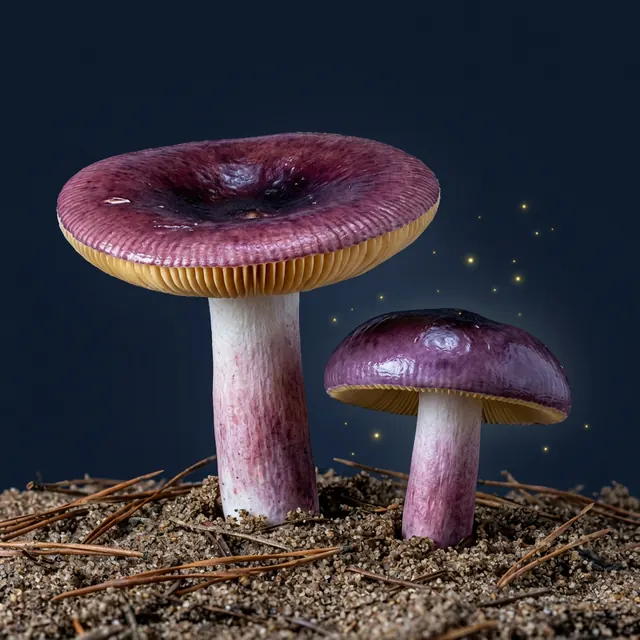
Russula sardonia
Russula sardonia
Polish folk names: gołąbek przydrożny
How to recognise
- Cap 4–10 cm, red-violet or purple-violet, almost blackish-purple in the centre, shiny.
- Gills dense, pale cream, then cream with a lemon tint.
- Stem 3–8 cm, at first white, later with purple-violet tints.
- Flesh lemon yellow, turning orange over time when damaged; taste strongly burning, smell fruity.
Up close
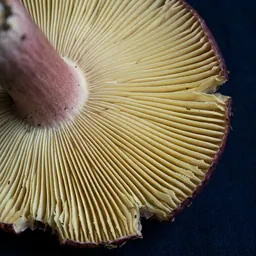 cytrynowe blaszki
Underside of the cap
Gills cream with a distinct lemon tinge, often forked.
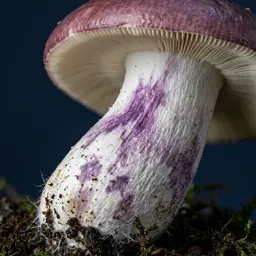 fioletowy nalot
Stem
White stem with a purple-violet bloom.
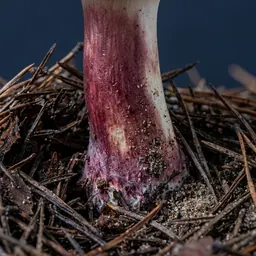 under pine
Base of the stem
Grows in pine needles on sandy soil.
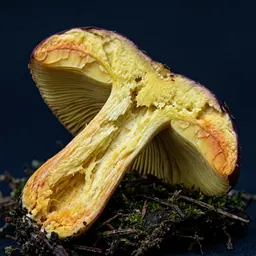 yellow flesh
Cross-section
Flesh lemon-yellow, turning orange with time; taste strongly burning.
The close-ups are AI illustrations. Any doubt is settled by a mycologist or herbalist, not by a photo.
Where and when it grows
Various forests, most often under pines on sandy soils, also under larches, firs and spruces. From September to November; common in Poland.
JanFebMarAprMayJunJulAugSepOctNovDec
Most often under: pine, less often larch, fir, spruce.
Beware of the lookalike
Gołąbek poduchowaty. Gołąbek poduchowaty and other violet brittlegills are also acrid, but none has lemon-yellow gills.
Frequently asked questions
Is russula sardonia edible?
Nie. This mushroom is poisonous. Suspected of causing gastrointestinal disorders. Similarly burning russulas eaten raw cause diarrhoea, vomiting and colicky abdominal pain.
When does russula sardonia grow?
September – November. Various forests, most often under pines on sandy soils, also under larches, firs and spruces. From September to November; common in Poland.
Russula sardonia: what is it easily confused with?
Most often with the species Gołąbek poduchowaty. Gołąbek poduchowaty and other violet brittlegills are also acrid, but none has lemon-yellow gills.