

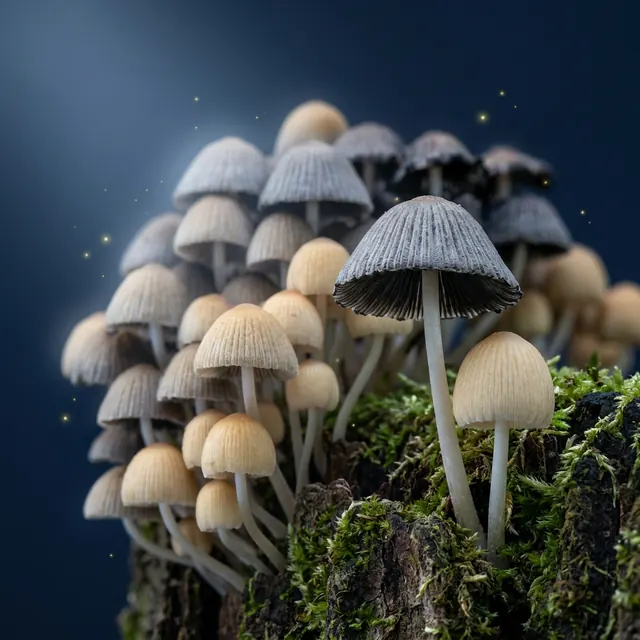
Fairy inkcap
Coprinellus disseminatus
Polish folk names: czernidłak gromadny
How to recognise
- Cap 1–1.5 cm, bell-shaped like a thimble, finely folded radially; cream or ochre when young, then grey.
- Under a magnifying glass tiny hairs can be seen on the cap.
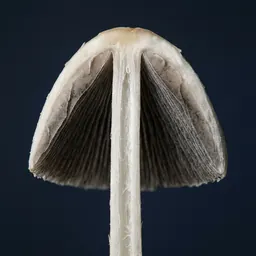
- Gills white, then grey-violet, finally almost black; they do not deliquesce.
- Stem 4–5 cm, about 1 mm thick, whitish, often bent.
Up close
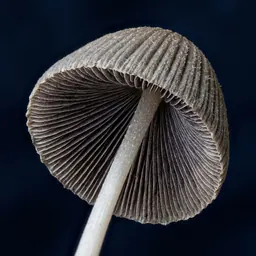 grey to black
Underside of the cap
Gills distant, attached, white, then grey-violet, almost black in old ones.
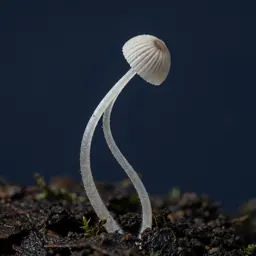 nitkowaty
Stem
Stem thin as a matchstick, whitish, brittle, often bent.
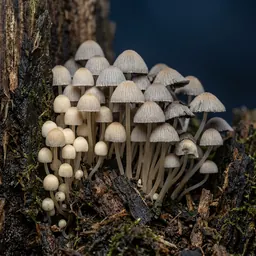 setki obok siebie
Base of the stem
The fruiting bodies grow by the hundreds from a single trunk or from wood hidden in the ground.
 very thin flesh
Cross-section
Flesh whitish, very thin, does not dissolve into black slime.
The close-ups are AI illustrations. Any doubt is settled by a mycologist or herbalist, not by a photo.
Where and when it grows
In groups, in dense carpets on rotting trunks and stumps, also around the living trunks of old trees. From May to November, several times a season; very common in Poland.
JanFebMarAprMayJunJulAugSepOctNovDec
Most often under: trunks and stumps of deciduous trees.
Beware of the lookalike
Common ink cap. The common inkcap is many times larger, grey and dissolves into a black liquid. The fairy inkcap has caps 1-1.5 cm across and grows in hundreds.
Good to know
Harmless, but so tiny that it has no culinary value. Usually regarded as inedible.
Frequently asked questions
Is fairy inkcap edible?
No, fairy inkcap is inedible. Harmless, but so tiny that it has no culinary value. Usually regarded as inedible.
When does fairy inkcap grow?
May – November. In groups, in dense carpets on rotting trunks and stumps, also around the living trunks of old trees. From May to November, several times a season; very common in Poland.
Fairy inkcap: what is it easily confused with?
Most often with the species Common ink cap. The common inkcap is many times larger, grey and dissolves into a black liquid. The fairy inkcap has caps 1-1.5 cm across and grows in hundreds.