

Parasitic bolete
Pseudoboletus parasiticus
Partially protected species
Polish folk names: podgrzybek tęgoskórowy, podgrzybek pasożytniczy
How to recognise
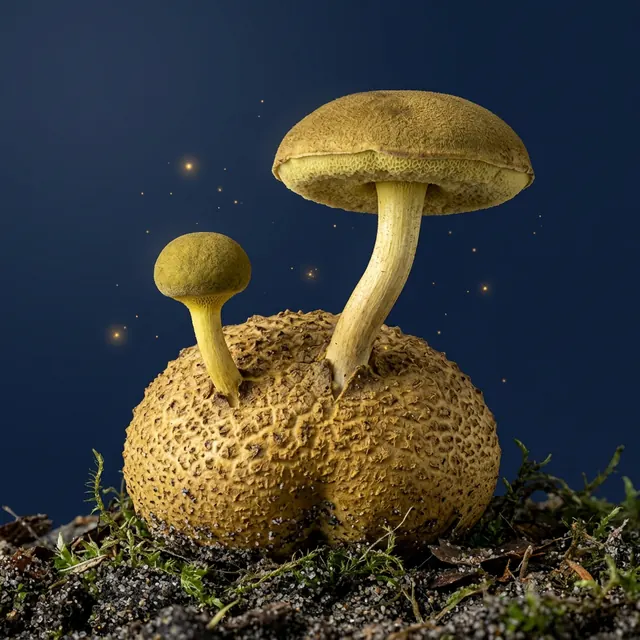
- Cap 2–6 cm, dirty yellow, greenish-ochre to olive-brown, dry and suede-like, cracking into small fields in drought.
- Tubes yellow when young, later brownish-olive.
- Stem 3–7 cm tall and 0.4–2 cm thick, yellow to olive, narrowed below and usually strongly curved.
- 1–5 fruiting bodies grow from a single common earthball.
Where and when it grows
A parasite of the common earthball in deciduous forests, sometimes outside forests, on acidic sandy and peaty soils. In summer and autumn; rare in Poland (about 150 sites until 2020).
JanFebMarAprMayJunJulAugSepOctNovDec
Most often under: on the fruit bodies of the common earthball.
Beware of the lookalike
Suede bolete. The suede bolete usually grows on the ground. The parasitic bolete always grows out of an earthball, which practically rules out a mistake.
Good to know
Edible, but too rare and small to matter. It grows on the poisonous earthball and is protected in Poland – do not collect it.
Frequently asked questions
Is parasitic bolete edible?
No, parasitic bolete is inedible. Edible, but too rare and small to matter. It grows on the poisonous earthball and is protected in Poland – do not collect it.
When does parasitic bolete grow?
July – October. A parasite of the common earthball in deciduous forests, sometimes outside forests, on acidic sandy and peaty soils. In summer and autumn; rare in Poland (about 150 sites until 2020).
Parasitic bolete: what is it easily confused with?
Most often with the species Suede bolete. The suede bolete usually grows on the ground. The parasitic bolete always grows out of an earthball, which practically rules out a mistake.