

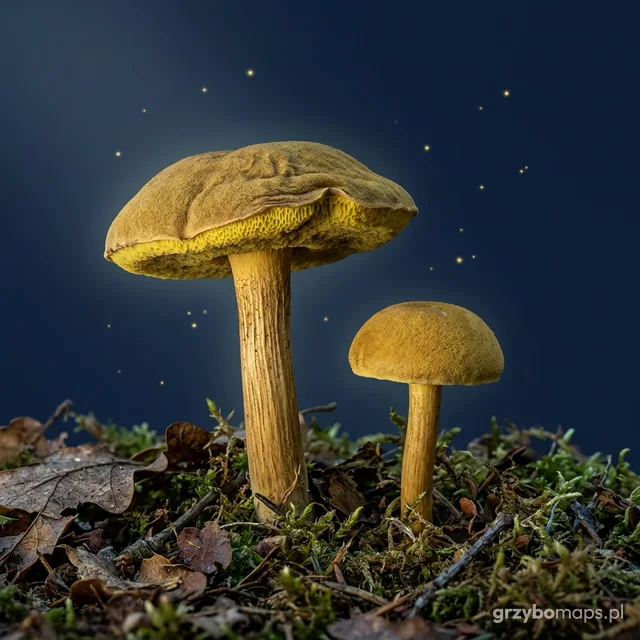
Suede bolete
Xerocomus subtomentosus
Polish folk names: zajączek
How to recognise
- Cap olive to yellow-brown, suede-like, not slimy.
- Pores wide, angular, bright yellow, not turning blue when pressed or only very weakly.
- Stem slender, yellow-brown, often with longitudinal ridges.
- Flesh whitish to pale yellow, hardly changes colour.
Up close
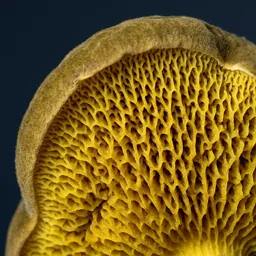 kanciaste pory
Underside of the cap
Pores large, angular, bright yellow; they do not turn blue, or only very faintly.
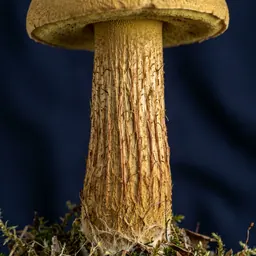 ribs
Stem
Stem slender, yellow-brown, often with longitudinal ridges.
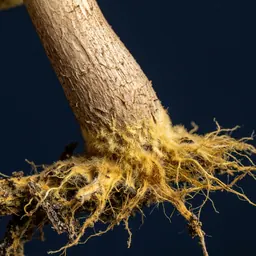 yellow mycelium
Base of the stem
Base narrowed, with yellowish mycelium, without a volva.
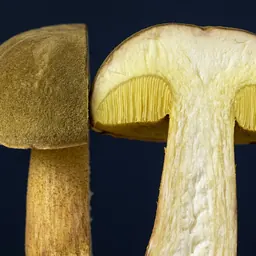 hardly turns blue
Cross-section
Flesh whitish to pale yellow, hardly changes colour.
The close-ups are AI illustrations. Any doubt is settled by a mycologist or herbalist, not by a photo.
Where and when it grows
Deciduous and mixed forests, forest edges, parks. From June to October.
JanFebMarAprMayJunJulAugSepOctNovDec
Most often under: oak, beech, birch, spruce.
Beware of the lookalike
Peppery bolete. The peppery bolete is smaller, has rusty-copper pores, yellow mycelium at the base and a burning, peppery taste. The suede bolete has yellow pores and a mild taste.
In the kitchen
Tasty, firmer than the Xerocomus boletes; for frying, soups and sauces, and it can also be dried.
Where in Poland
Most records in the GBIF database: wielkopolskie, zachodniopomorskie, mazowieckie, śląskie, łódzkie.
Recipes with this mushroom
Frequently asked questions
Is suede bolete edible?
Yes, suede bolete is an edible mushroom.
When does suede bolete grow?
June – October. Deciduous and mixed forests, forest edges, parks. From June to October.
Suede bolete: what is it easily confused with?
Most often with the species Peppery bolete. The peppery bolete is smaller, has rusty-copper pores, yellow mycelium at the base and a burning, peppery taste. The suede bolete has yellow pores and a mild taste.
Where in Poland does suede bolete grow?
Most records (GBIF): wielkopolskie, zachodniopomorskie, mazowieckie, śląskie, łódzkie. Most often under: oak, beech, birch, spruce.