

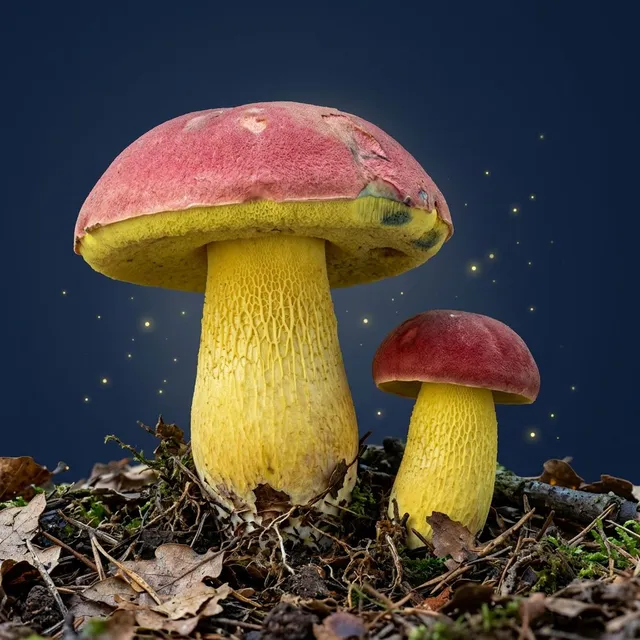
Royal bolete
Butyriboletus regius
Strictly protected: picking forbidden
Polish folk names: masłoborowik królewski, borowik żółtobrązowy podgatunek królewski
How to recognise
- Cap 6–15 cm, pink, raspberry to pinkish red, matt, fading with age.
- Tubes and pores lemon to golden yellow, turning slightly blue when pressed.
- Stem thick, yellow, with a fine yellow net in the upper part, sometimes with a pink bloom at the bottom.
- Flesh yellowish, turning slightly or patchily blue when cut.
Where and when it grows
Warm deciduous forests, most often under beech and oak, on calcareous soils. From July to September. Very rare in Poland.
JanFebMarAprMayJunJulAugSepOctNovDec
Most often under: beech, oak, hornbeam, warm broadleaf forests.
Beware of the lookalike
Devil's bolete. Satan's bolete has a pale, whitish-grey cap and red pores. The royal bolete has a pink cap and yellow pores.
Good to know
Edible, but in Poland it is under strict protection and very rare, so it must not be picked. If you find it, take a photo and leave it.
Frequently asked questions
Is royal bolete edible?
No, royal bolete is inedible. Edible, but in Poland it is under strict protection and very rare, so it must not be picked. If you find it, take a photo and leave it.
When does royal bolete grow?
July – September. Warm deciduous forests, most often under beech and oak, on calcareous soils. From July to September. Very rare in Poland.
Royal bolete: what is it easily confused with?
Most often with the species Devil's bolete. Satan's bolete has a pale, whitish-grey cap and red pores. The royal bolete has a pink cap and yellow pores.