

Club foot
Ampulloclitocybe clavipes (syn. Clitocybe clavipes)
Polish folk names: lejkówka buławotrzonowa
How to recognise
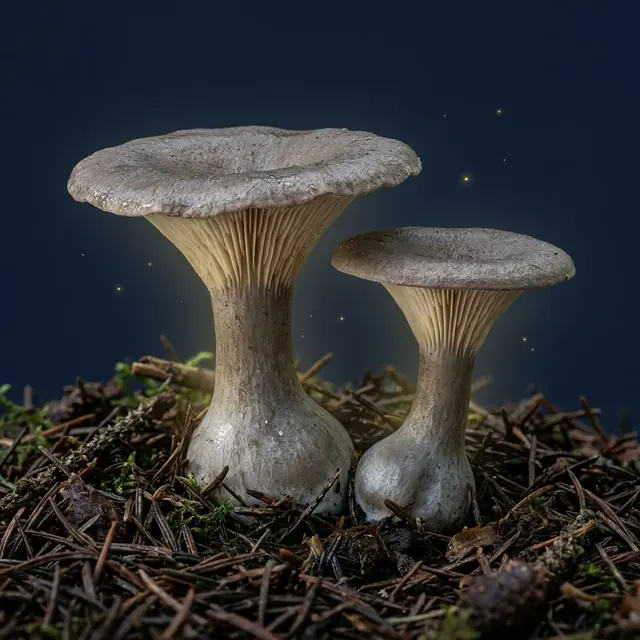
- Cap 3–8 cm, grey-brown to olive-brown, flat, becoming funnel-shaped with age.
- Gills cream to yellowish, distant, clearly running down the stem.
- Club-shaped stem: narrow at the top, strongly swollen and spongy at the base.
- Smell weak, fruity, reminiscent of bitter almonds or flowers.
Where and when it grows
Coniferous and mixed forests, in the leaf litter under spruces and pines, also in beech woods. From August to November.
JanFebMarAprMayJunJulAugSepOctNovDec
Most often under: coniferous and mixed forests, under spruces, pines and beeches.
Beware of the lookalike
Clouded funnel. The cloud funnel is larger, ash-grey and has a straight, thick stem. The club foot has a stem widened at the base into a club and spongy inside.
Good to know
Poisonous in combination with alcohol. It blocks the breakdown of alcohol, similar to the common ink cap, so after eating it and drinking even a small amount of alcohol, flushing of the face, palpitations, nausea and a drop in blood pressure appear, sometimes even several days later. Do not pick it.
Frequently asked questions
Is club foot edible?
Nie. This mushroom is poisonous.
When does club foot grow?
August – November. Coniferous and mixed forests, in the leaf litter under spruces and pines, also in beech woods. From August to November.
Club foot: what is it easily confused with?
Most often with the species Clouded funnel. The cloud funnel is larger, ash-grey and has a straight, thick stem. The club foot has a stem widened at the base into a club and spongy inside.