

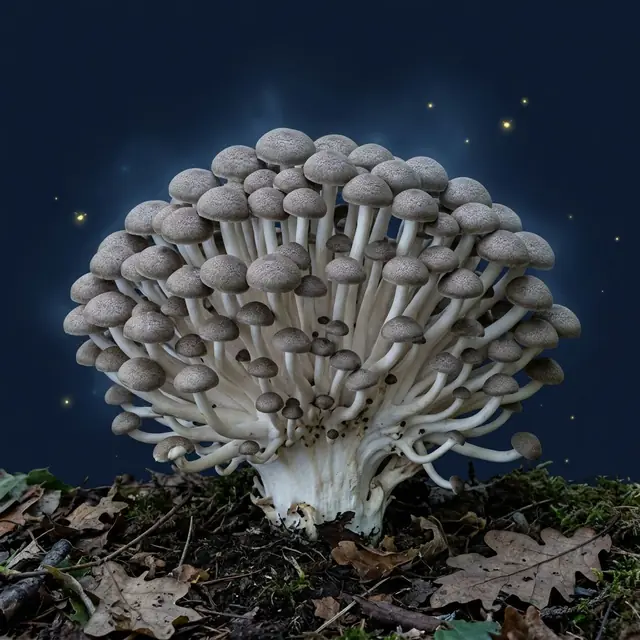
Umbrella polypore
Polyporus umbellatus
Polish folk names: żagiew okółkowa
How to recognise
- Clump 10–40 cm, made up of several dozen to several hundred little caps.
- Each little cap round, 1–4 cm, grey-brown, slightly concave in the middle, with the stalk in the centre.
- Stalks white, fused into a single branched base.
- Underneath small white pores running down the stalks; flesh white, smells pleasant.
Where and when it grows
Old deciduous forests, on the ground at the base of oaks, beeches and hornbeams, growing from an underground tuber. From June to September.
JanFebMarAprMayJunJulAugSepOctNovDec
Most often under: old deciduous forests, at the base of oaks, beeches and hornbeams.
Beware of the lookalike
Hen of the woods. Hen of the woods has fan-shaped caps attached at the side. The umbrella polypore has round little caps set in the middle on stalks like parasols.
Good to know
Edible, but in Poland it is under partial protection and listed on the Red List as a threatened species, so it must not be collected. In China its underground tuber has long been used in folk medicine.
Frequently asked questions
Is umbrella polypore edible?
No, umbrella polypore is inedible. Edible, but in Poland it is under partial protection and listed on the Red List as a threatened species, so it must not be collected. In China its underground tuber has long been used in folk medicine.
When does umbrella polypore grow?
June – September. Old deciduous forests, on the ground at the base of oaks, beeches and hornbeams, growing from an underground tuber. From June to September.
Umbrella polypore: what is it easily confused with?
Most often with the species Hen of the woods. Hen of the woods has fan-shaped caps attached at the side. The umbrella polypore has round little caps set in the middle on stalks like parasols.