

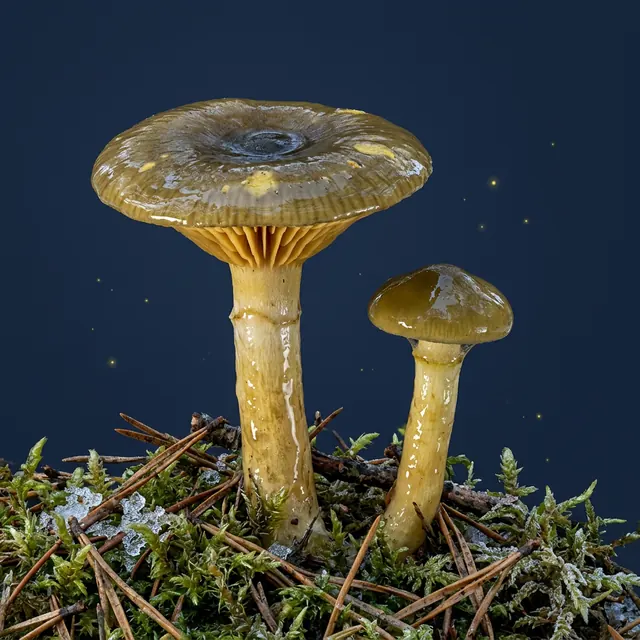
Herald of winter
Hygrophorus hypothejus
Polish folk names: wodnicha jasnożółta, wodnicha złota, oślaz jasnożółty
How to recognise
- Cap 1–6 (up to 10) cm, olive-brown, darker in the centre, covered with slime, in places yellowish with age.
- Gills sparse, broad, soft, slightly decurrent, cream, then yellow.
- Stem 5–7 cm, 0.3–0.7 cm thick, yellowish, covered with a thick layer of slime below the ring zone.
- Flesh yellowish, soft, without a distinct smell.
Up close
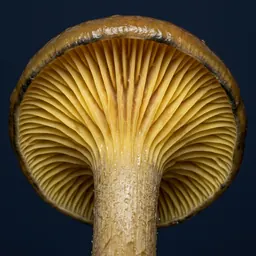 yellow gills
Underside of the cap
Gills distant, thick, soft, slightly decurrent, cream, then yellow.
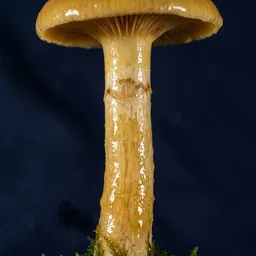 slimy
Stem
Stem slender, yellowish, covered below the ring zone with a thick layer of slime.
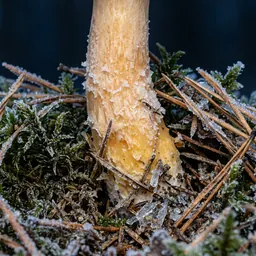 w igliwiu
Base of the stem
Base sometimes narrowed, among needles and moss under pine.
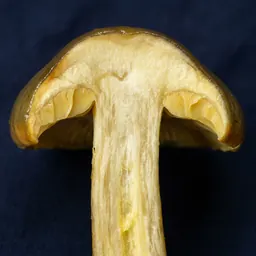 yellowish flesh
Cross-section
Flesh yellowish, soft, fibrous in the stem, without a distinct smell.
The close-ups are AI illustrations. Any doubt is settled by a mycologist or herbalist, not by a photo.
Where and when it grows
Coniferous and mixed forests, mainly under pines, often in groups. Appears after the first frosts, in late autumn and early winter, sometimes under snow. Rare in Poland.
JanFebMarAprMayJunJulAugSepOctNovDec
Most often under: sosna.
Beware of the lookalike
False chanterelle. The false chanterelle has a dry, orange, suede-like cap and crowded, forked gills. The herald of winter has a slimy, olive-brown cap and widely spaced, thick gills.
In the kitchen
Remove the slimy skin, fry or stew the caps for 15–20 min. Rare in Poland, so collect sparingly.
Good to know
On the Red List of Fungi of Poland with status I (indeterminate threat). Accumulates lead and cadmium from the soil.
Frequently asked questions
Is herald of winter edible?
Yes, herald of winter is an edible mushroom.
When does herald of winter grow?
October – December. Coniferous and mixed forests, mainly under pines, often in groups. Appears after the first frosts, in late autumn and early winter, sometimes under snow. Rare in Poland.
Herald of winter: what is it easily confused with?
Most often with the species False chanterelle. The false chanterelle has a dry, orange, suede-like cap and crowded, forked gills. The herald of winter has a slimy, olive-brown cap and widely spaced, thick gills.