

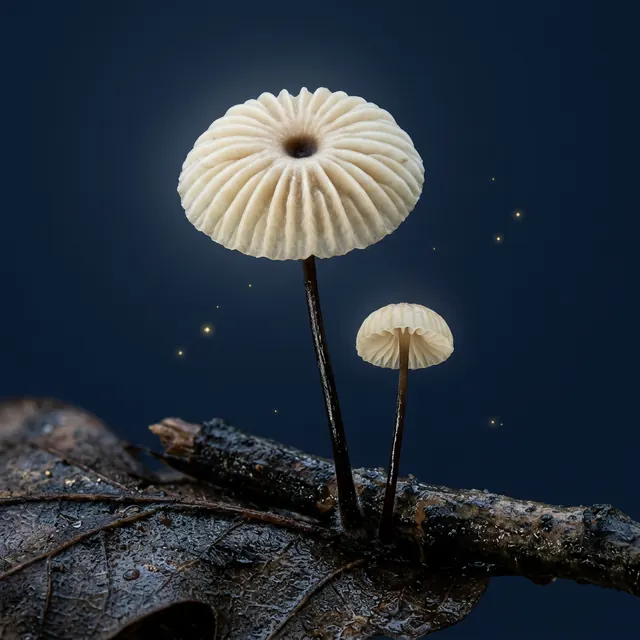
Pinwheel marasmius
Marasmius rotula
Polish folk names: twardzioszek okrągły, bedłka szpilkowa
How to recognise
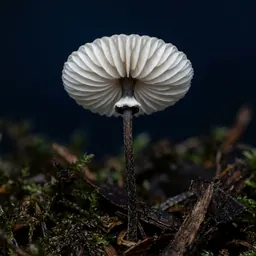
- Cap 6–15 mm, hemispherical and deeply grooved, like a cake mould; whitish, with an ochre-brown depression in the centre.
- Gills whitish, very distant, joined at the stem into a little collar (a “collarium”).
- Stem thread-like, shiny, red-brown, blackish at the base.
- Flesh very thin, without smell or taste.
Up close
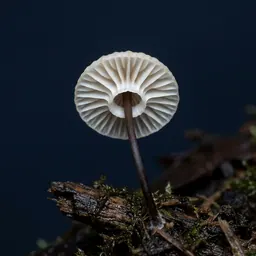 little collar
Underside of the cap
A dozen or so distant, white gills fuse around the stem into a little collar, without touching the stem itself.
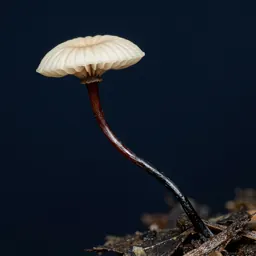 hair-like, dark
Stem
Stem as thin as a hair, glossy, reddish-brown to black, stiff.
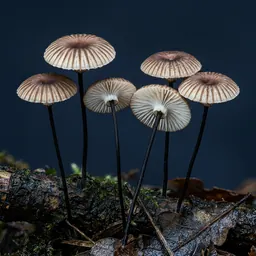 on a twig
Base of the stem
Grows from fallen twigs and leaf stalks, often many side by side.
 bardzo cienki
Cross-section
Flesh very thin, whitish, without smell or taste.
The close-ups are AI illustrations. Any doubt is settled by a mycologist or herbalist, not by a photo.
Where and when it grows
On leaves and twigs of deciduous trees, in tufts or in groups. From May to October; very common in Poland.
JanFebMarAprMayJunJulAugSepOctNovDec
Most often under: fallen leaves and twigs of deciduous trees.
Beware of the lookalike
Twardzioszek nalistny. Twardzioszek nalistny has a beige or ochre cap and no collar of gills around the stem.
Good to know
Too small to have any culinary value.
Frequently asked questions
Is pinwheel marasmius edible?
No, pinwheel marasmius is inedible. Too small to have any culinary value.
When does pinwheel marasmius grow?
May – October. On leaves and twigs of deciduous trees, in tufts or in groups. From May to October; very common in Poland.
Pinwheel marasmius: what is it easily confused with?
Most often with the species Twardzioszek nalistny. Twardzioszek nalistny has a beige or ochre cap and no collar of gills around the stem.