

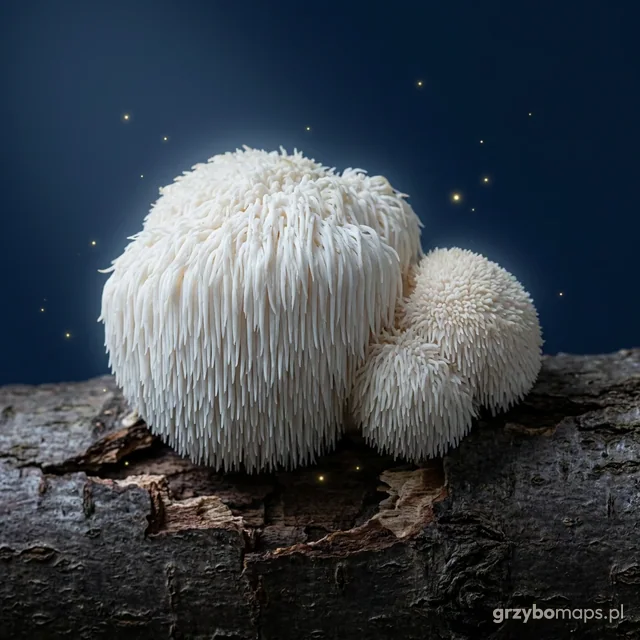
Lion's mane
Hericium erinaceus
Strictly protected species
Polish folk names: lwia grzywa, soplówka grzebieniasta, jeżogłówka
How to recognise
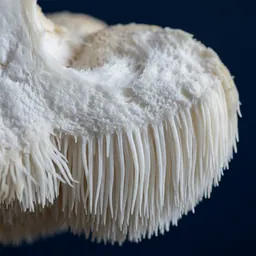
- Fruiting body round or cushion-shaped, 8–20 cm, without a cap or stem.
- Covered with dense, unbranched spines 2–6 cm long, hanging like icicles or a beard.
- Snow-white when young, cream to ochre-brown with age.
- Grows singly from wounds and cavities on the trunks of living or dead old trees.
Up close
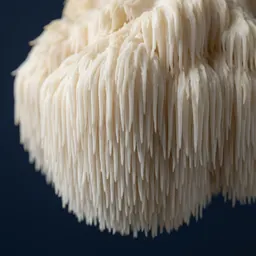 hanging spines
Surface
Dense, unbranched spines 2–6 cm long, hanging like icicles or a beard.
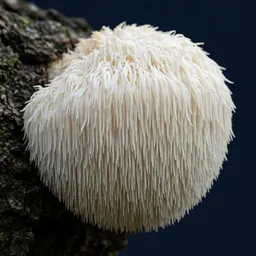 bez trzonu
Shape
Fruiting body round, without a cap and stem.
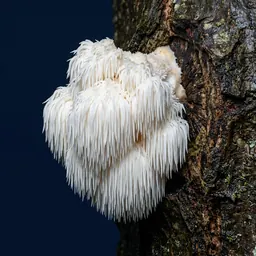 on a stump
Attachment
Grows out of wounds and hollows on the trunks of old trees.
 white flesh
Cross-section
Flesh white, spongy, does not change colour.
The close-ups are AI illustrations. Any doubt is settled by a mycologist or herbalist, not by a photo.
Where and when it grows
Natural deciduous forests, old beech and oak woods, on trunks of old trees. From August to November; rare in Poland.
JanFebMarAprMayJunJulAugSepOctNovDec
Most often under: beech, oak (old, hollow trees).
Beware of the lookalike
Coral tooth. The coral tooth (Hericium coralloides) is branched like coral, with short spines on the twigs; it is protected too.
In the kitchen
Protected species – it must not be picked or destroyed. Leave it in the forest and enjoy the sight. For eating, buy cultivated mushrooms.
Where in Poland
Most records in the GBIF database: zachodniopomorskie, warmińsko-mazurskie, mazowieckie, pomorskie, łódzkie.
Frequently asked questions
Is lion's mane edible?
Yes, lion's mane is an edible mushroom.
When does lion's mane grow?
August – November. Natural deciduous forests, old beech and oak woods, on trunks of old trees. From August to November; rare in Poland.
Lion's mane: what is it easily confused with?
Most often with the species Coral tooth. The coral tooth (Hericium coralloides) is branched like coral, with short spines on the twigs; it is protected too.
Where in Poland does lion's mane grow?
Most records (GBIF): zachodniopomorskie, warmińsko-mazurskie, mazowieckie, pomorskie, łódzkie. Most often under: beech, oak (old, hollow trees).