

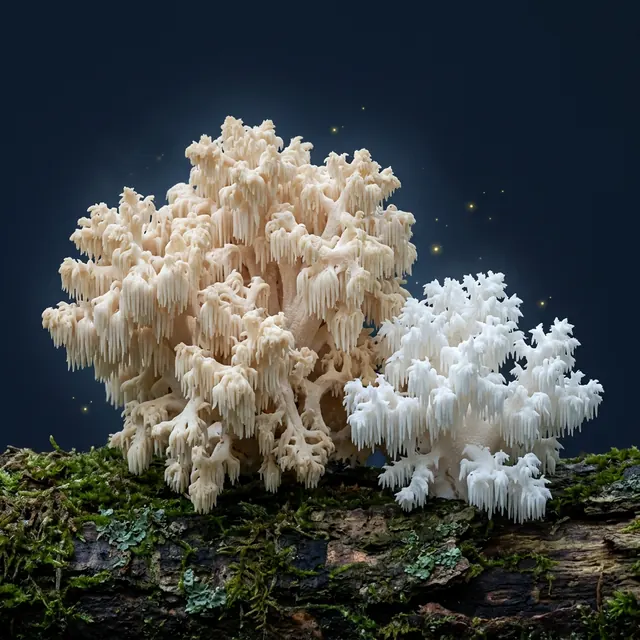
Coral tooth
Hericium coralloides
Partially protected species
Polish folk names: soplówka gałęzista, kolczak koralowy, kolczak koralkowy
How to recognise
- Fruiting body irregularly oval, 10–40 cm, with a short stem branching into numerous branchlets.
- Branches ending in tufts of soft, thin spines 1–2 cm long.
- Pure white when young, creamy or cream-coloured when older, turning yellow when dry.
- Flesh white, brittle, does not change colour when cut; smell and taste faint.
Up close
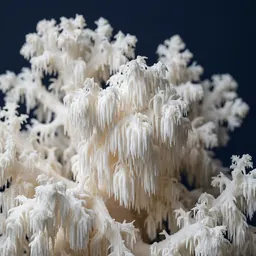 short tufts
Spines
Soft, thin spines 1–2 cm hang in tufts from the tips of the branches.
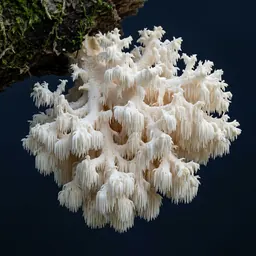 white coral
Shape
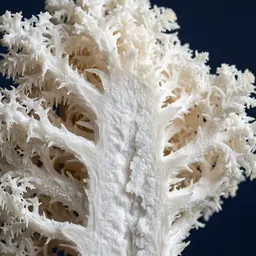
Fruiting body 10–40 cm made of many branched twigs, like white coral.
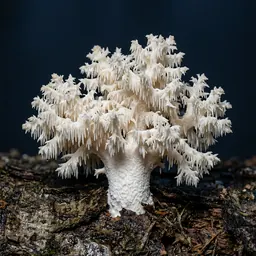 short stem
Attachment to wood
A short, thick stem grows from a dead, fallen beech trunk.
 white flesh
Cross-section
Flesh white, brittle, does not change colour when cut.
The close-ups are AI illustrations. Any doubt is settled by a mycologist or herbalist, not by a photo.
Where and when it grows
Dead, fallen or broken trunks of deciduous trees, mainly beech, in damp forests. From summer to autumn. About 300 sites in Poland, mainly in the south and north; Red List: V.
JanFebMarAprMayJunJulAugSepOctNovDec
Most often under: beech, less often birch and aspen (dead, fallen trunks).
Beware of the lookalike
Lion's mane. The lion's mane is spherical, without twigs, with long spines 2-6 cm long. The coral tooth is branched, with short spines.
In the kitchen
A protected species: do not collect it. Young fruiting bodies are edible, but in Poland leave them in the forest; buy Hericium mushrooms for eating from cultivation.
Frequently asked questions
Is coral tooth edible?
Yes, coral tooth is an edible mushroom.
When does coral tooth grow?
July – November. Dead, fallen or broken trunks of deciduous trees, mainly beech, in damp forests. From summer to autumn. About 300 sites in Poland, mainly in the south and north; Red List: V.
Coral tooth: what is it easily confused with?
Most often with the species Lion's mane. The lion's mane is spherical, without twigs, with long spines 2-6 cm long. The coral tooth is branched, with short spines.