

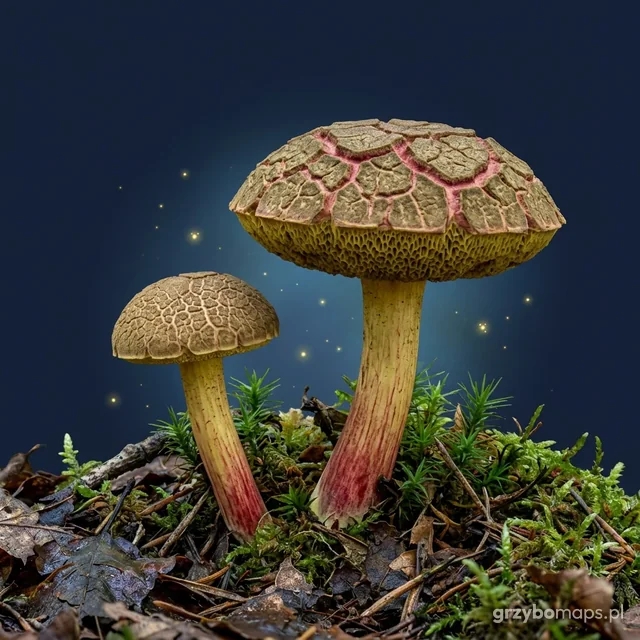
Red-cracking bolete
Xerocomellus chrysenteron
Polish folk names: podgrzybek złotopory, podgrzybek złotawy, zajączek
How to recognise
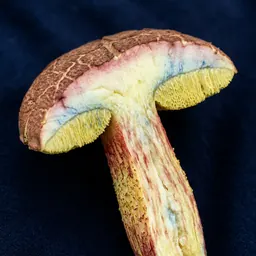
- Cap brown to olive-brown, 3–8 cm, dry, quickly cracking into small fields with reddish fissures.
- Pores yellow, later olive, turning slightly blue when pressed.
- Stem slender, yellowish, carmine-red at the bottom.
- Flesh pale yellow, reddish under the skin, turns blue only weakly.
Up close
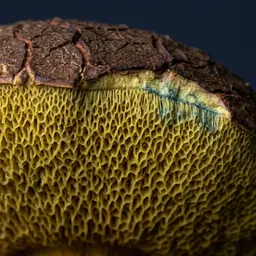 yellow pores
Underside of the cap
Pores fairly large, yellow, then olive; turn slightly blue when pressed.
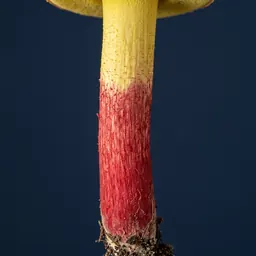 red at the bottom
Stem
Stem slender, yellowish at the top, carmine-red lower down; no net.
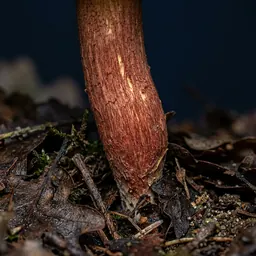 bez pochwy
Base of the stem
Base narrowed, without a volva.
 lekko sinieje
Cross-section
Flesh pale yellow, reddish under the skin, turns blue only weakly.
The close-ups are AI illustrations. Any doubt is settled by a mycologist or herbalist, not by a photo.
Where and when it grows
Common in deciduous and coniferous forests and in parks. From June to October.
JanFebMarAprMayJunJulAugSepOctNovDec
Most often under: beech, oak, spruce, pine (various forests).
Beware of the lookalike
Suede bolete. The suede bolete has wider, bright yellow pores, a velvety cap without reddish cracks and a stem without a carmine tinge. Both are edible.
In the kitchen
Young fruiting bodies are suitable for frying and sauces, less so for drying; the flesh is soft, mild.
Good to know
Older fruiting bodies are often infected with white or yellow mould and spoil quickly – collect only young, firm ones.
Where in Poland
Most records in the GBIF database: wielkopolskie, łódzkie, zachodniopomorskie, dolnośląskie, pomorskie.
Recipes with this mushroom
Frequently asked questions
Is red-cracking bolete edible?
Yes, red-cracking bolete is an edible mushroom.
When does red-cracking bolete grow?
June – October. Common in deciduous and coniferous forests and in parks. From June to October.
Red-cracking bolete: what is it easily confused with?
Most often with the species Suede bolete. The suede bolete has wider, bright yellow pores, a velvety cap without reddish cracks and a stem without a carmine tinge. Both are edible.
Where in Poland does red-cracking bolete grow?
Most records (GBIF): wielkopolskie, łódzkie, zachodniopomorskie, dolnośląskie, pomorskie. Most often under: beech, oak, spruce, pine (various forests).