

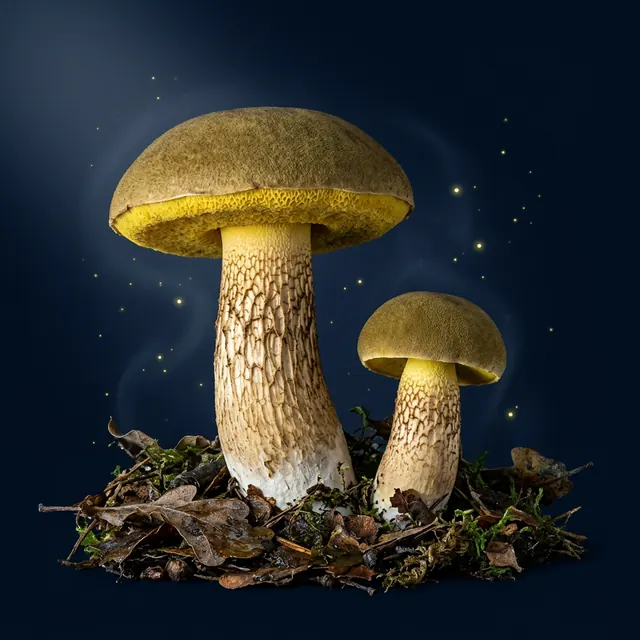
Xerocomus ferrugineus
Xerocomus ferrugineus
Polish folk names: podgrzybek żeberkowany, podgrzybek żeberkowaty
How to recognise
- Cap 3–10 cm, yellowish-olive, olive-brown to reddish-brown, felty and dry.
- Tubes and pores intensely golden-yellow when young, later brownish-yellow; do not turn blue.
- Stem 3–10 cm tall and 0.5–2.5 cm thick, cream to pale reddish-brown; mycelium at the base lemon-yellow.
- Flesh whitish or yellowish; dried fruiting bodies smell unpleasantly of urine.
Where and when it grows
Warm deciduous forests under oaks and hornbeams, under beeches, also in mountain coniferous forests, often on sandy soils. From summer to autumn; rare.
JanFebMarAprMayJunJulAugSepOctNovDec
Most often under: oak, hornbeam, beech; mountain coniferous forests.
Beware of the lookalike
Suede bolete. The suede bolete has pores that turn blue when pressed, a stem pinkish in its lower half and white mycelium at the base.
In the kitchen
Edible. Prepare it like the suede bolete (podgrzybek zajączek): fry or stew. Do not dry it, because dried it smells unpleasant.
Frequently asked questions
Is xerocomus ferrugineus edible?
Yes, xerocomus ferrugineus is an edible mushroom.
When does xerocomus ferrugineus grow?
July – October. Warm deciduous forests under oaks and hornbeams, under beeches, also in mountain coniferous forests, often on sandy soils. From summer to autumn; rare.
Xerocomus ferrugineus: what is it easily confused with?
Most often with the species Suede bolete. The suede bolete has pores that turn blue when pressed, a stem pinkish in its lower half and white mycelium at the base.