

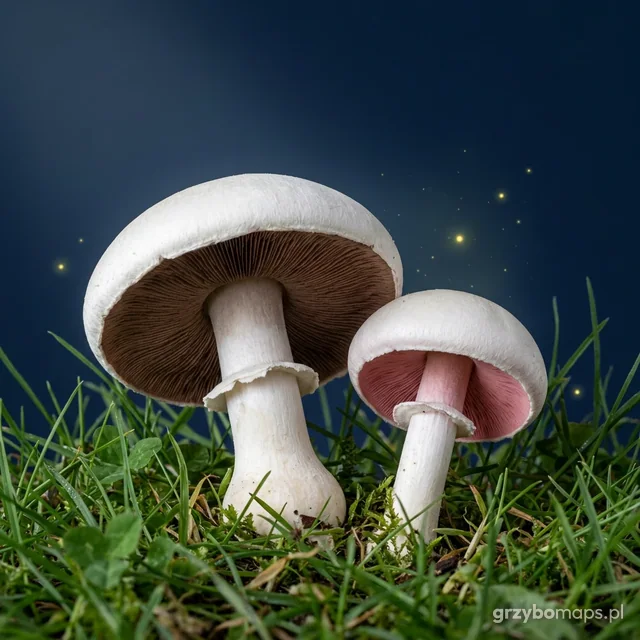
Field mushroom
Agaricus campestris
Polish folk names: pieczarka polna, pieczarka
How to recognise
- Gills white in the youngest, quickly turning pink, then chocolate-brown
- No volva at the base
- Grows in meadows, not in the forest
Up close
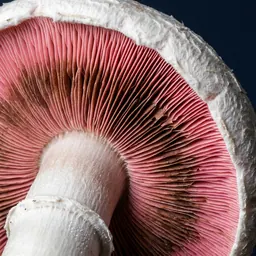 pink gills
Underside of the cap
Gills free, pink in young ones, later chocolate-brown – never white for long.
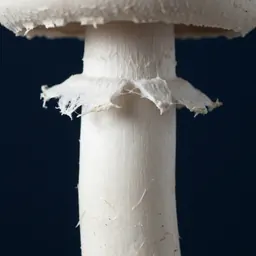 thin ring
Stem
White stem with a thin, fleeting ring.
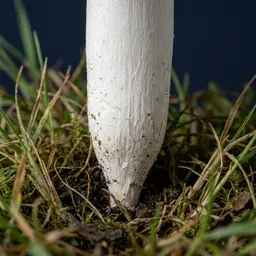 bez pochwy
Base of the stem
Base narrowed, with no bulb and no volva; grows in meadows and pastures.
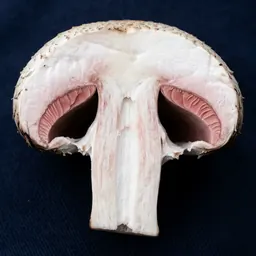 turns slightly pink
Cross-section
Flesh white, turns slightly pink when cut; does not turn chrome yellow.
The close-ups are AI illustrations. Any doubt is settled by a mycologist or herbalist, not by a photo.
Where and when it grows
Meadows, pastures, ditches, moderately fertilised places. From May to October.
JanFebMarAprMayJunJulAugSepOctNovDec
Most often under: meadows, pastures, ditches, not in the forest.
Beware of the lookalike
Destroying angel. An amanita always has white gills and a bulb in a sheath. Do not collect young, closed “button mushrooms”.
Feature-by-feature comparison: Field mushroom or Destroying angel?
In the kitchen
Like a shop-bought button mushroom: in the pan, in soup, in sauce.
Where in Poland
Most records in the GBIF database: wielkopolskie, łódzkie, mazowieckie, dolnośląskie, małopolskie.
Recipes with this mushroom
Frequently asked questions
Is field mushroom edible?
Yes, field mushroom is an edible mushroom.
When does field mushroom grow?
May – October. Meadows, pastures, ditches, moderately fertilised places. From May to October.
Field mushroom: what is it easily confused with?
Most often with the species Destroying angel. An amanita always has white gills and a bulb in a sheath. Do not collect young, closed “button mushrooms”.
Where in Poland does field mushroom grow?
Most records (GBIF): wielkopolskie, łódzkie, mazowieckie, dolnośląskie, małopolskie. Most often under: meadows, pastures, ditches, not in the forest.