

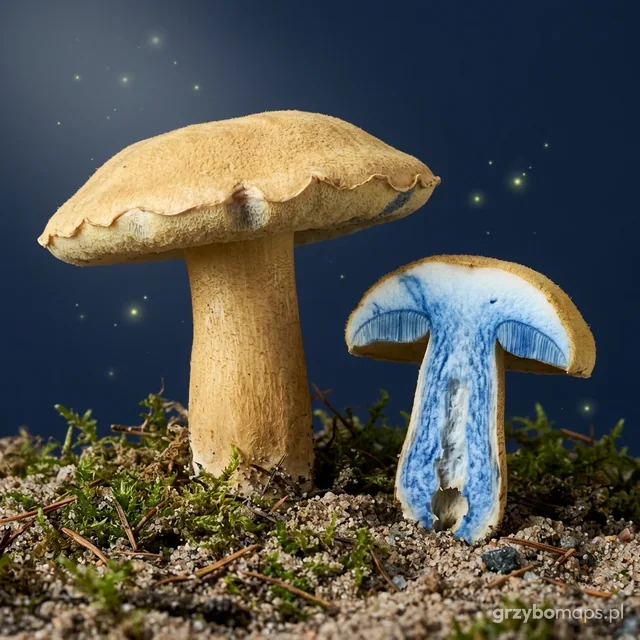
Cornflower bolete
Gyroporus cyanescens
Polish folk names: modrzak, piaskowiec siniak
How to recognise
- Cap 3.5–12 cm, cream to straw-yellow, felty-suede-like.
- Tubes white, then yellowish, turning blue when pressed.
- Stem brittle, hollow inside, the colour of the cap.
- Flesh white, immediately turning intensely blue when cut.
Up close
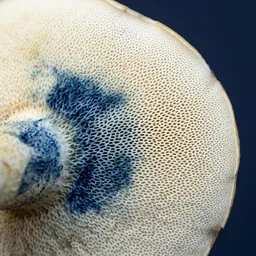 sinieje
Underside of the cap
Tubes white, then yellowish, turning blue when pressed.
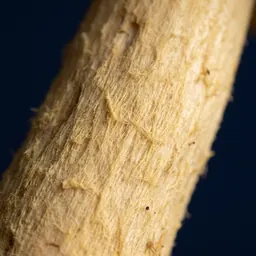 kruchy
Stem
Stem brittle, the colour of the cap, felty.
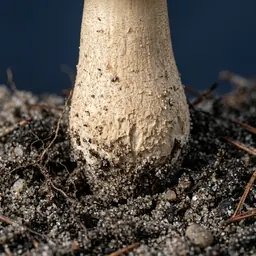 bez pochwy
Base of the stem
Base without a volva; sandy soils.
 chabrowy
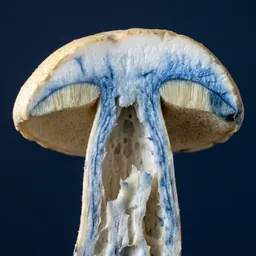
Cross-section
Flesh white, instantly turns an intense cornflower blue when cut; stem with chambers.
The close-ups are AI illustrations. Any doubt is settled by a mycologist or herbalist, not by a photo.
Where and when it grows
Rare; deciduous and mixed forests on sandy, acidic soils, under oaks, beeches, pines and birches. From June to November.
JanFebMarAprMayJunJulAugSepOctNovDec
Most often under: oak, beech, pine, birch (sandy soils).
Beware of the lookalike
Chestnut bolete. The chestnut bolete has a chestnut-brown cap and does not turn blue; the cornflower bolete is pale yellow and turns blue instantly.
In the kitchen
Good for frying, sauces and soups; it loses its blue colour after cooking.
Good to know
A rare species on the Polish Red List (category R) – better to spare it. The blue colour disappears after heat treatment.
Where in Poland
Most records in the GBIF database: łódzkie, pomorskie, wielkopolskie, śląskie, mazowieckie.
Frequently asked questions
Is cornflower bolete edible?
Yes, cornflower bolete is an edible mushroom.
When does cornflower bolete grow?
June – November. Rare; deciduous and mixed forests on sandy, acidic soils, under oaks, beeches, pines and birches. From June to November.
Cornflower bolete: what is it easily confused with?
Most often with the species Chestnut bolete. The chestnut bolete has a chestnut-brown cap and does not turn blue; the cornflower bolete is pale yellow and turns blue instantly.
Where in Poland does cornflower bolete grow?
Most records (GBIF): łódzkie, pomorskie, wielkopolskie, śląskie, mazowieckie. Most often under: oak, beech, pine, birch (sandy soils).