

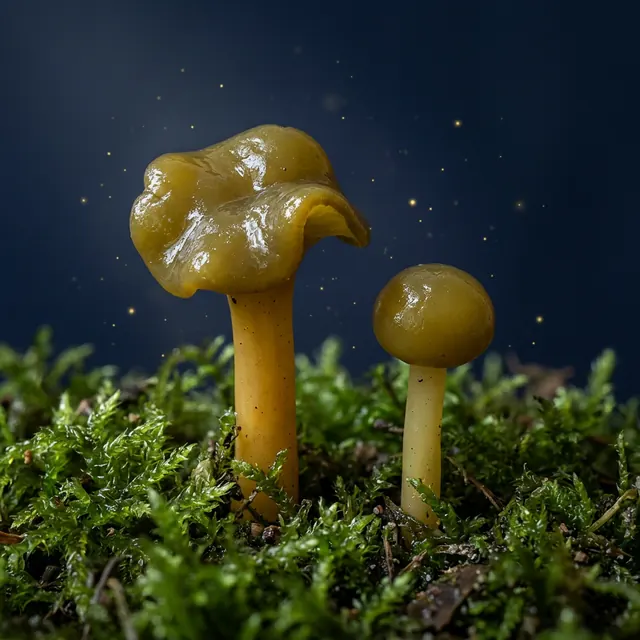
Jelly babies
Leotia lubrica
How to recognise
- Fruiting body 2–7 cm tall, made up of a head and a stem, slippery and jelly-like.
- Head 1–2 cm, spherical, later lobed, with an inrolled margin, yellow, yellow-olive to yellow-green.
- Stem 2–7 cm tall and 2–5 mm thick, hollow, lemon or golden yellow, later ochre.
- Flesh jelly-like, watery, without taste or smell.
Up close
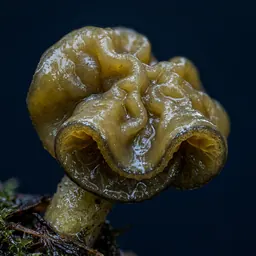 slippery, lobed
Flower head
Head olive-yellow, irregularly lobed, with a curled-under edge, slimy.
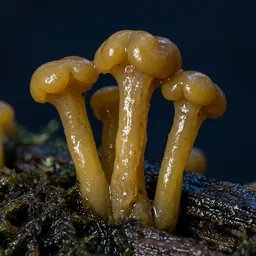 yellow, hollow
Stem
Stem lemon to ochre, slippery, widened at the top, hollow inside.
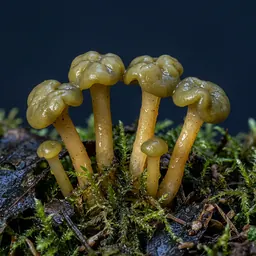 w mchu
Base of the stem
Several fruiting bodies often grow together from moss or litter.
 galareta
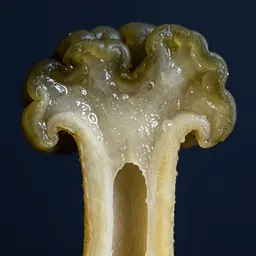
Cross-section
Flesh gelatinous and watery, brownish, without taste or smell.
The close-ups are AI illustrations. Any doubt is settled by a mycologist or herbalist, not by a photo.
Where and when it grows
Damp deciduous, coniferous and mixed forests, among mosses and grasses, by paths, sometimes in small groups. From summer to autumn; fairly common in Poland.
JanFebMarAprMayJunJulAugSepOctNovDec
Most often under: damp deciduous, coniferous and mixed forests, among mosses.
Beware of the lookalike
Hełmik okrągławy. Hełmik grows in the leaf litter under spruces, is yellowish ochre, dry and has a folded head.
Good to know
Polish sources differ: Wikipedia says “edible, unpalatable”, grzyby.pl says “inedible”. Small amounts of monomethylhydrazine, the toxin of false morels, have been detected in it. Do not eat it.
Frequently asked questions
Is jelly babies edible?
No, jelly babies is inedible. Polish sources differ: Wikipedia says “edible, unpalatable”, grzyby.pl says “inedible”. Small amounts of monomethylhydrazine, the toxin of false morels, have been detected in it. Do not eat it.
When does jelly babies grow?
August – November. Damp deciduous, coniferous and mixed forests, among mosses and grasses, by paths, sometimes in small groups. From summer to autumn; fairly common in Poland.
Jelly babies: what is it easily confused with?
Most often with the species Hełmik okrągławy. Hełmik grows in the leaf litter under spruces, is yellowish ochre, dry and has a folded head.