

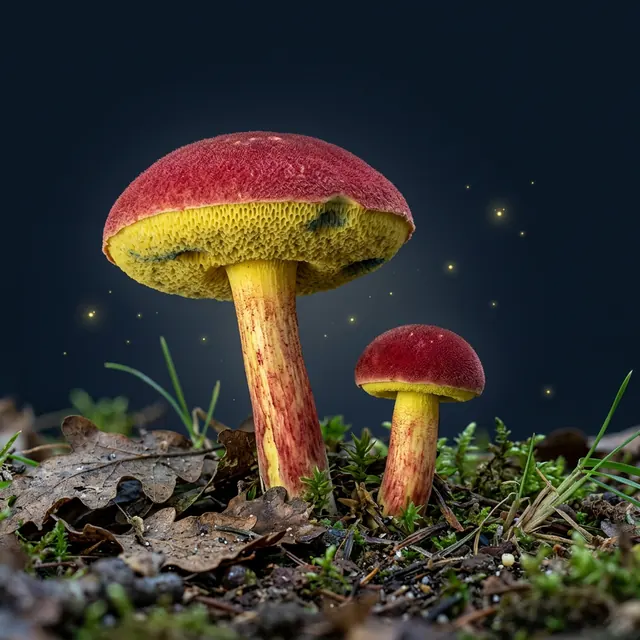
Ruby bolete
Hortiboletus rubellus
Polish folk names: podgrzybek czerwonawy, podgrzybek wielobarwny
How to recognise
- Cap 3–10 cm, intensely carmine-red when young, later matt pink, dry and suede-like.
- Pores lemon-yellow, later olive, turn blue when pressed.
- Stem 3–12 cm, cylindrical, often curved, pale yellow with red streaks and spots.
- Flesh yellowish, turns blue when cut.
Where and when it grows
Deciduous forests and parks, under oaks, lindens and birches. From July to September; not very common in Poland.
JanFebMarAprMayJunJulAugSepOctNovDec
Most often under: oak, linden, birch; parks.
Beware of the lookalike
Red-cracking bolete. Faded, brown specimens of the ruby bolete are very similar to the red cracking bolete. A young ruby bolete has a bright red cap.
In the kitchen
Edible, but of low value: soft and quickly becomes wormy. Collect only young, healthy fruiting bodies and fry them with other mushrooms; throw away any that are moldy.
Frequently asked questions
Is ruby bolete edible?
Yes, ruby bolete is an edible mushroom.
When does ruby bolete grow?
July – September. Deciduous forests and parks, under oaks, lindens and birches. From July to September; not very common in Poland.
Ruby bolete: what is it easily confused with?
Most often with the species Red-cracking bolete. Faded, brown specimens of the ruby bolete are very similar to the red cracking bolete. A young ruby bolete has a bright red cap.