

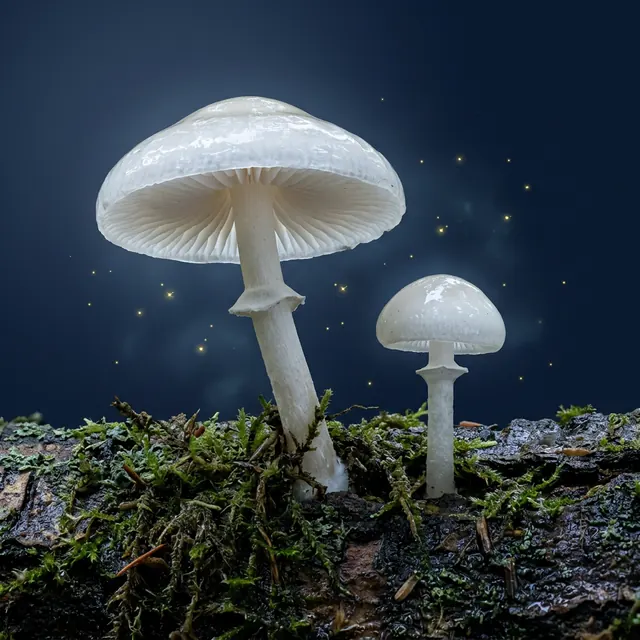
Porcelain fungus
Mucidula mucida
Polish folk names: monetka kleista
How to recognise
- Cap 3–10 cm, pure white or ivory, translucent, very sticky and slimy when damp.
- Gills white, broad, sparse.
- Stem 4–10 cm, 0.5–1 cm thick, hard, whitish, brownish below, with a large ring.
- Flesh white, thin, odourless.
Up close
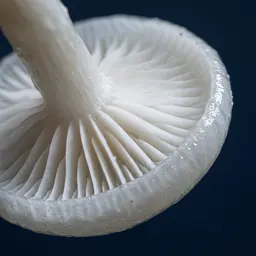 distant, white
Underside of the cap
Gills white, broad, distant, adnate.
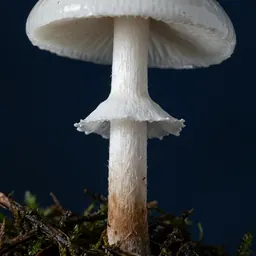 ring
Stem
Stem tough, whitish, with a distinct, drooping or spreading ring.
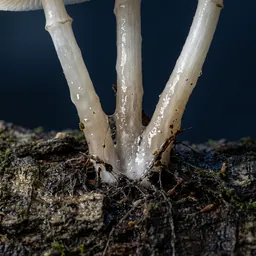 on beech
Base of the stem
Base brownish, growing from the bark of a dead beech, often in bundles.
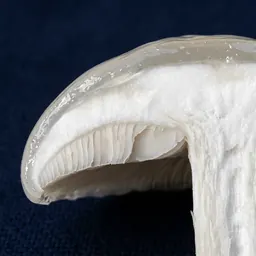 slimy skin
Cross-section
Flesh white, thin and soft in the cap; the skin is covered with a thick layer of slime.
The close-ups are AI illustrations. Any doubt is settled by a mycologist or herbalist, not by a photo.
Where and when it grows
Logs and trunks of dead or weakened beeches, often high up, in forests and parks, in bundles. From June to November.
JanFebMarAprMayJunJulAugSepOctNovDec
Most often under: beech (dead trunks and branches).
Beware of the lookalike
brak. No other mushroom growing on wood has such a pure white, slippery, porcelain-like cap.
Good to know
It produces a compound with antifungal action (mucidermin), from which an ointment for fungal skin infections was made.
Frequently asked questions
Is porcelain fungus edible?
No, porcelain fungus is inedible. It produces a compound with antifungal action (mucidermin), from which an ointment for fungal skin infections was made.
When does porcelain fungus grow?
June – November. Logs and trunks of dead or weakened beeches, often high up, in forests and parks, in bundles. From June to November.
Porcelain fungus: what is it easily confused with?
Most often with the species brak. No other mushroom growing on wood has such a pure white, slippery, porcelain-like cap.