

Deceiving bolete
Suillellus queletii
Polish folk names: borowik Quéleta, borowik gładkotrzonowy
How to recognise
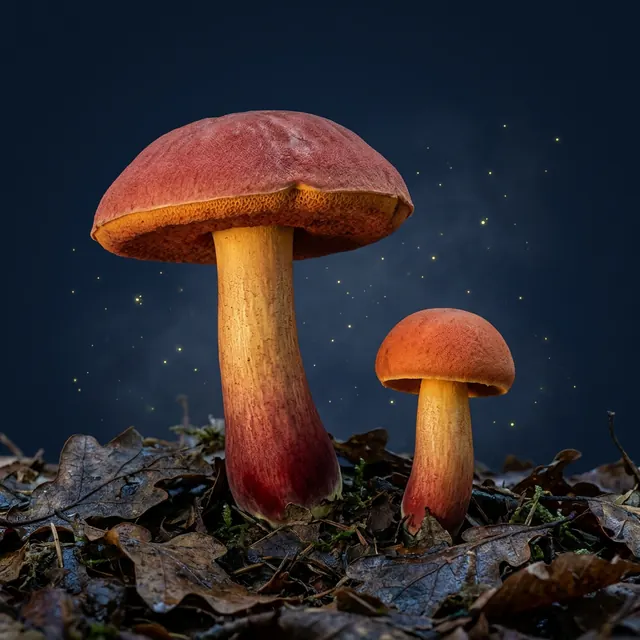
- Cap 5–15 cm, matt, ochre-yellow to brown, later orange, brick-red or blood-red; turns blue when damaged.
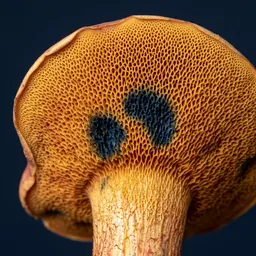
- Tubes 15–30 mm, golden yellow; pores olive-yellow, then orange-yellow, turning blue when damaged.
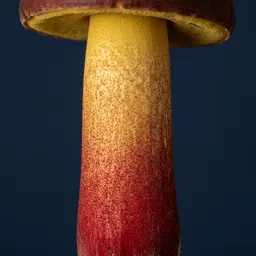
- Stem 4–15 cm, yellow under the cap, lower down dirty red to carmine, always without a net.
- Flesh yellow, red or purple at the base of the stem, turning blue when broken.
Up close
 orange pores
Underside of the cap
Pores orange-yellow, dirty olive with age; turn blue when damaged.
 bez siateczki
Stem
Stem yellow under the cap, carmine lower down, smooth or finely dotted, never with a net.
 czerwona
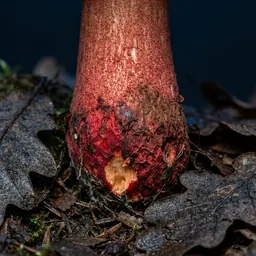
Base of the stem
Base of the stem red to brownish-red.
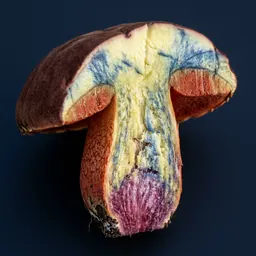 turns blue
Cross-section
Flesh yellow, purple at the base, turns blue when broken.
The close-ups are AI illustrations. Any doubt is settled by a mycologist or herbalist, not by a photo.
Where and when it grows
Bright deciduous forests in warm areas, under oaks and beeches. From May to October; rare in Poland, status E – endangered.
JanFebMarAprMayJunJulAugSepOctNovDec
Most often under: oak, beech (warm deciduous forests).
Beware of the lookalike
Lurid bolete. The lurid bolete has a distinct red net on the stem. Gładkotrzonowy has a smooth or finely dotted stem.
Good to know
Described as edible in some sources, as inedible in others. Because of its rarity in Poland it should not be collected.
Frequently asked questions
Is deceiving bolete edible?
No, deceiving bolete is inedible. Described as edible in some sources, as inedible in others. Because of its rarity in Poland it should not be collected.
When does deceiving bolete grow?
May – October. Bright deciduous forests in warm areas, under oaks and beeches. From May to October; rare in Poland, status E – endangered.
Deceiving bolete: what is it easily confused with?
Most often with the species Lurid bolete. The lurid bolete has a distinct red net on the stem. Gładkotrzonowy has a smooth or finely dotted stem.