

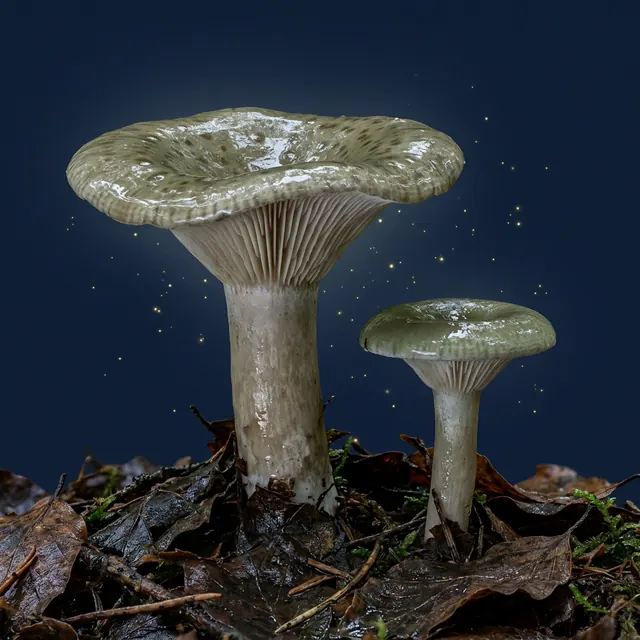
Beech milkcap
Lactarius blennius
Polish folk names: mleczaj lepki
How to recognise
- Cap 5–20 cm, funnel-shaped early on, uniformly olive-grey to grey-green, strongly slimy when young.
- Gills dense, white, then straw-coloured to pale ochre; olive-brown when pressed.
- Stem 3–8 cm, paler than the cap, sticky in damp weather, with shallow pits in older ones.
- Milk abundant, white, unchanging, very burning to the taste.
Up close
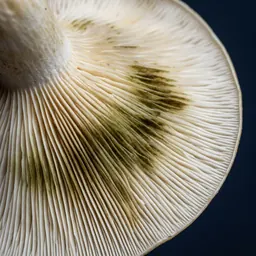 white gills
Underside of the cap
Gills crowded, white to straw-coloured; turn brown when pressed, in older ones with olive-rusty speckles.
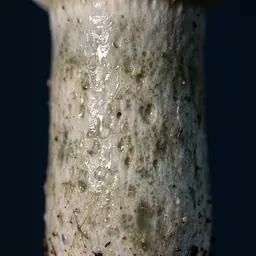 sticky, paler
Stem
Stem paler than the cap, sticky in damp weather, with shallow pits in older ones.
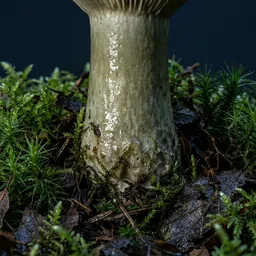 narrowed
Base of the stem
Stem cylindrical or narrowed towards the base, without a ring.
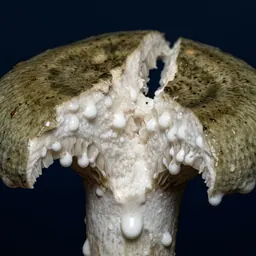 burning latex
Cross-section
Flesh white, hard; abundant white latex with a very burning taste flows out.
The close-ups are AI illustrations. Any doubt is settled by a mycologist or herbalist, not by a photo.
Where and when it grows
Various forests, mainly with beeches, also with birches and lindens, in damp places with mosses. From July to November; common in Poland, up to 1400 m above sea level.
JanFebMarAprMayJunJulAugSepOctNovDec
Most often under: beech, birch, linden.
Beware of the lookalike
Mleczaj szaroplamisty. Mleczaj szaroplamisty grows under birches, has a more violet-grey cap, and its white milk turns grey-green as it dries.
Frequently asked questions
Is beech milkcap edible?
No, beech milkcap is inedible.
When does beech milkcap grow?
July – November. Various forests, mainly with beeches, also with birches and lindens, in damp places with mosses. From July to November; common in Poland, up to 1400 m above sea level.
Beech milkcap: what is it easily confused with?
Most often with the species Mleczaj szaroplamisty. Mleczaj szaroplamisty grows under birches, has a more violet-grey cap, and its white milk turns grey-green as it dries.