

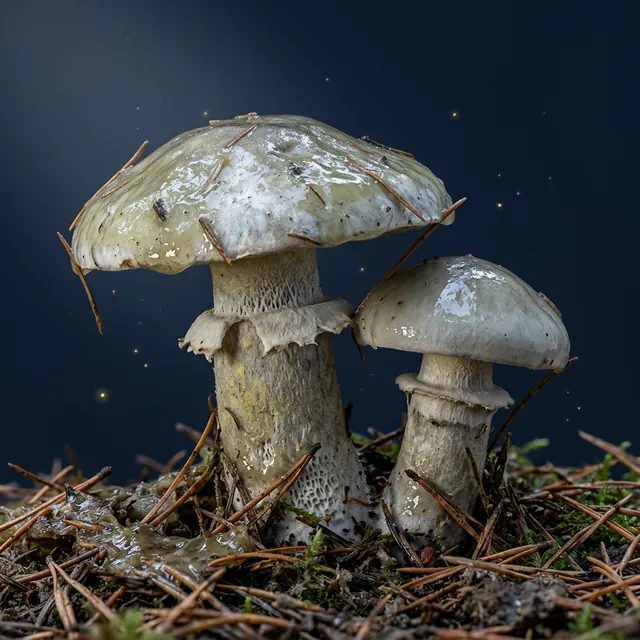
Sticky bolete
Suillus viscidus
Polish folk names: Suillus aeruginascens
How to recognise
- Cap 4–12 cm, slimy, greyish-white, yellowish-grey, olive-grey to reddish-grey; the skin peels off easily.
- Pores large, angular, whitish, later dark blue, finally cinnamon-brownish.
- Stem 4–10 cm, yellowish-grey, reticulate above the ring; ring thin, quickly disappears.
- Flesh whitish to greyish, taste mild.
Where and when it grows
Only under larch, in forests and plantations. From July to October; not very common.
JanFebMarAprMayJunJulAugSepOctNovDec
Most often under: modrzew.
Beware of the lookalike
Larch bolete. The larch bolete also grows under larch, but has a yellow cap and yellow pores. The sticky bolete has greyish-white to dark grey pores.
In the kitchen
Edible, but inferior to other slippery jacks. Remove the slimy skin, and it is best to pickle these mushrooms together with tastier species.
Frequently asked questions
Is sticky bolete edible?
Yes, sticky bolete is an edible mushroom.
When does sticky bolete grow?
July – October. Only under larch, in forests and plantations. From July to October; not very common.
Sticky bolete: what is it easily confused with?
Most often with the species Larch bolete. The larch bolete also grows under larch, but has a yellow cap and yellow pores. The sticky bolete has greyish-white to dark grey pores.