

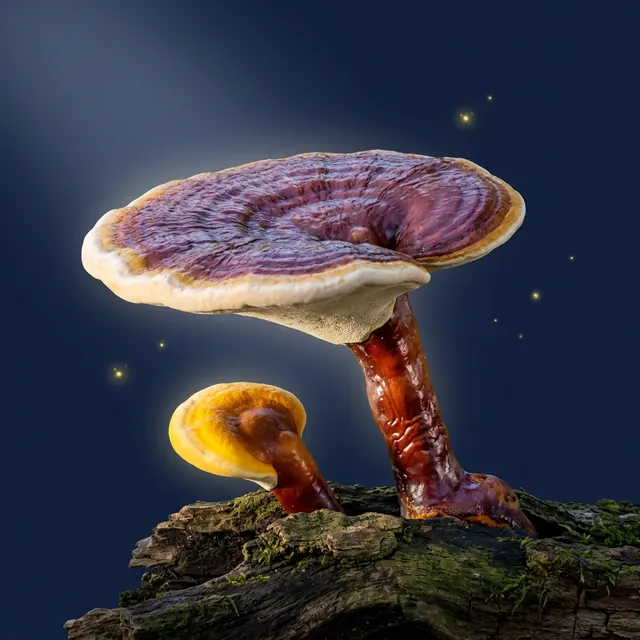
Ganoderma lucidum (reishi)
Ganoderma lucidum
Partially protected species
Polish folk names: reishi, lingzhi
How to recognise
- Cap 8–25 cm, flat, semicircular or kidney-shaped, with a glossy, seemingly varnished surface.
- Lemon yellow when young, then yellow-red, purple-brown to red-black; margin narrow, white or straw-coloured.
- Stem lateral, up to 15 cm long, just as glossy as the cap; stemless forms occur.
- Pores small, whitish, then cream to brown, turning brown when touched.
Up close
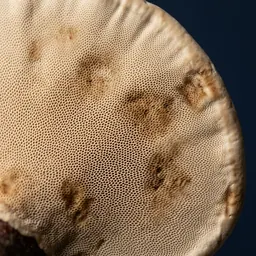 drobne pory
Underside of the cap
Pores small and round, 4–5 per 1 mm, whitish to cream, turning brown when touched.
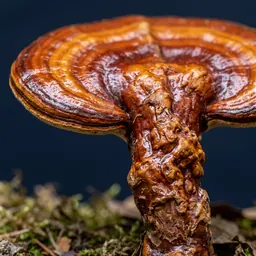 shiny, lateral
Stem
Stem lateral or eccentric, knobby, up to 15 cm, reddish-brown and shiny like lacquer.
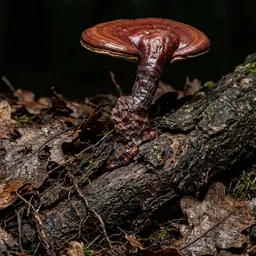 z korzeni
Base of the stem
Grows from roots or stumps, near oaks sometimes seemingly from the ground.
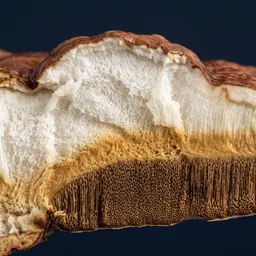 white flesh
Cross-section
Flesh spongy, white, ochre just above the tubes; under a lacquered skin.
The close-ups are AI illustrations. Any doubt is settled by a mycologist or herbalist, not by a photo.
Where and when it grows
Stumps, roots and trunk bases of deciduous trees, most often oak, in forests, parks and gardens. Fresh fruiting bodies in summer and autumn; rare in Poland (about 150 sites up to 2020).
JanFebMarAprMayJunJulAugSepOctNovDec
Most often under: oak and other deciduous trees (stumps, roots, trunk bases).
Beware of the lookalike
Lakownica brązowoczarna. Lakownica brązowoczarna (Ganoderma carnosum) is darker and grows on conifers, mainly fir.
Good to know
In Asia it has been used for centuries as “reishi” in traditional medicine, today mainly from cultivation. Reviews of clinical studies do not confirm its effectiveness in treating diseases in humans. Cases of acute toxic hepatitis after powdered preparations have been described; it may intensify the effect of anticoagulant drugs and affect immunosuppressive drugs. Talk to a doctor before using any preparations.
Frequently asked questions
Is ganoderma lucidum edible?
No, ganoderma lucidum is inedible. In Asia it has been used for centuries as “reishi” in traditional medicine, today mainly from cultivation. Reviews of clinical studies do not confirm its effectiveness in treating diseases in humans. Cases of acute toxic hepatitis after powdered preparations have been described; it may intensify the effect of anticoagulant drugs and affect immunosuppressive drugs. Talk to a doctor before using any preparations.
When does ganoderma lucidum grow?
June – October. Stumps, roots and trunk bases of deciduous trees, most often oak, in forests, parks and gardens. Fresh fruiting bodies in summer and autumn; rare in Poland (about 150 sites up to 2020).
Ganoderma lucidum: what is it easily confused with?
Most often with the species Lakownica brązowoczarna. Lakownica brązowoczarna (Ganoderma carnosum) is darker and grows on conifers, mainly fir.