

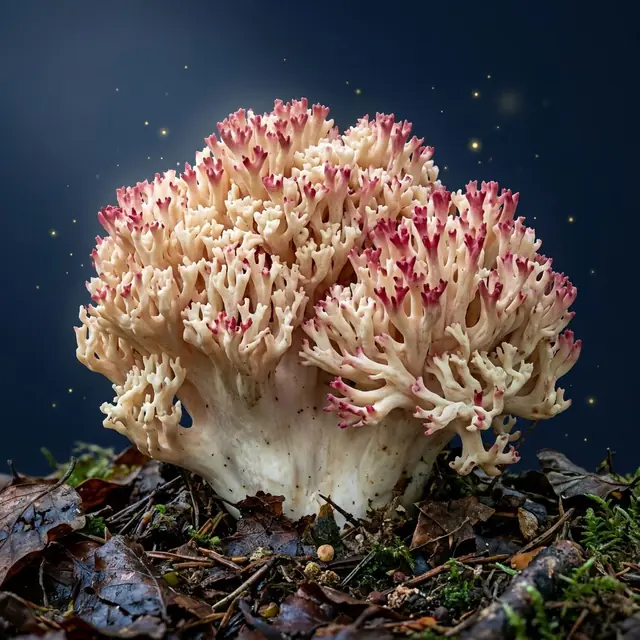
Pink-tipped coral
Ramaria botrytis
Polish folk names: kozia broda
How to recognise
- Bushy fruiting body, up to 15 cm wide and 20 cm tall, resembling a cauliflower.
- Trunk thick, short, white.
- Branches cream, dense, tips wine-red to pinkish, fading with age.
- Flesh white, fleshy, with a pleasant, fruity smell.
Where and when it grows
Deciduous and mixed forests, mainly beech woods, also under oaks and firs. From July to October. Uncommon in Poland.
JanFebMarAprMayJunJulAugSepOctNovDec
Most often under: deciduous and mixed forests, especially beech forests, also under oaks.
Beware of the lookalike
Lemon coral fungus. Yellow coral is entirely yellow, including the tips. The pink-tipped coral has whitish branches and clearly red or pink ends.
Good to know
It is sometimes described as edible, but in Poland it is on the Red List as a threatened species and is rarely found. It is easily confused with other coral fungi, some of which cause diarrhoea. Leave it in the forest.
Frequently asked questions
Is pink-tipped coral edible?
No, pink-tipped coral is inedible. It is sometimes described as edible, but in Poland it is on the Red List as a threatened species and is rarely found. It is easily confused with other coral fungi, some of which cause diarrhoea. Leave it in the forest.
When does pink-tipped coral grow?
July – October. Deciduous and mixed forests, mainly beech woods, also under oaks and firs. From July to October. Uncommon in Poland.
Pink-tipped coral: what is it easily confused with?
Most often with the species Lemon coral fungus. Yellow coral is entirely yellow, including the tips. The pink-tipped coral has whitish branches and clearly red or pink ends.