

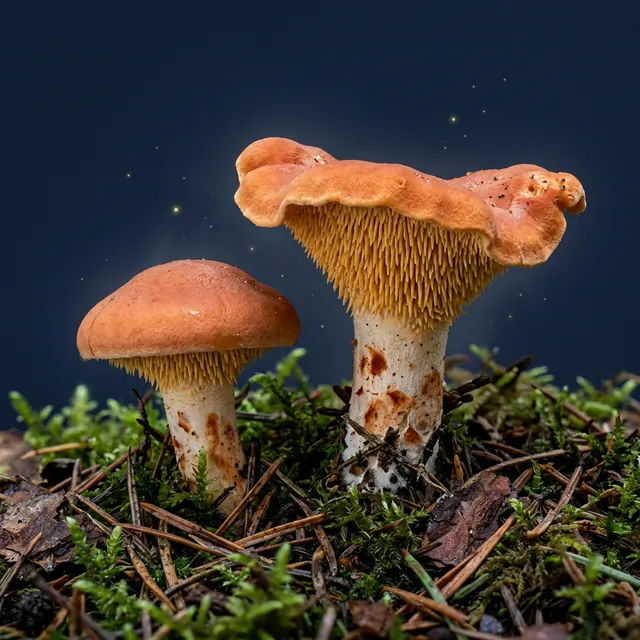
Terracotta hedgehog
Hydnum rufescens
Polish folk names: kolczak czerwonożółty, kolczak rudy
How to recognise
- Cap 3–8 cm, bare and smooth, rusty yellow, then brown-orange or rusty red, with a wavy margin.
- Spines up to 5 mm, dense and brittle, yellow-orange, usually not running down the stem; split at the tips in older ones.
- Stem 3–7 cm tall and 1–2 cm thick, whitish with yellow-orange spots, turns yellow when pressed.
- Flesh brittle, yellow or rusty red; the skin of older ones is bitter.
Up close
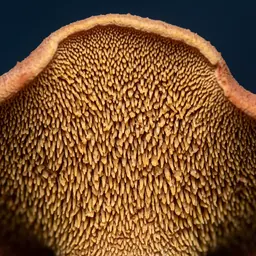 kolce
Underside of the cap
Under the cap dense, brittle, yellow-orange spines up to 5 mm, not gills or tubes.
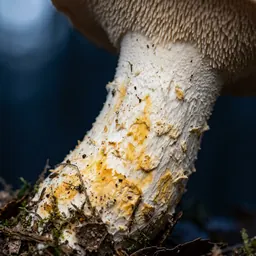 whitish, turns yellow
Stem
Stem whitish with yellow-orange patches; turns yellow when pressed.
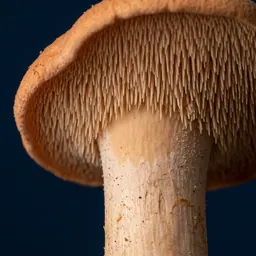 spines do not run down
Base of the stem
The spines usually end above the stem and do not run down it.
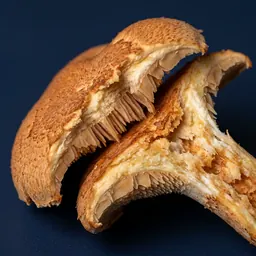 brittle flesh
Cross-section
Flesh brittle, yellowish to rusty; the spines detach easily from the cap.
The close-ups are AI illustrations. Any doubt is settled by a mycologist or herbalist, not by a photo.
Where and when it grows
On the ground in mixed forests, especially under fir and hornbeam. From June to November; fairly common in Poland.
JanFebMarAprMayJunJulAugSepOctNovDec
Most often under: fir, hornbeam.
Beware of the lookalike
Wood hedgehog. The wood hedgehog is paler and larger, and its spines run down onto a usually off-centre stem. Both are edible.
Feature-by-feature comparison: Terracotta hedgehog or Wood hedgehog?
In the kitchen
Collect young fruiting bodies; older ones are bitterish and fibrous. Fry or stew for 20–25 minutes; works well in a mix of mushrooms.
Frequently asked questions
Is terracotta hedgehog edible?
Yes, terracotta hedgehog is an edible mushroom.
When does terracotta hedgehog grow?
June – November. On the ground in mixed forests, especially under fir and hornbeam. From June to November; fairly common in Poland.
Terracotta hedgehog: what is it easily confused with?
Most often with the species Wood hedgehog. The wood hedgehog is paler and larger, and its spines run down onto a usually off-centre stem. Both are edible.