

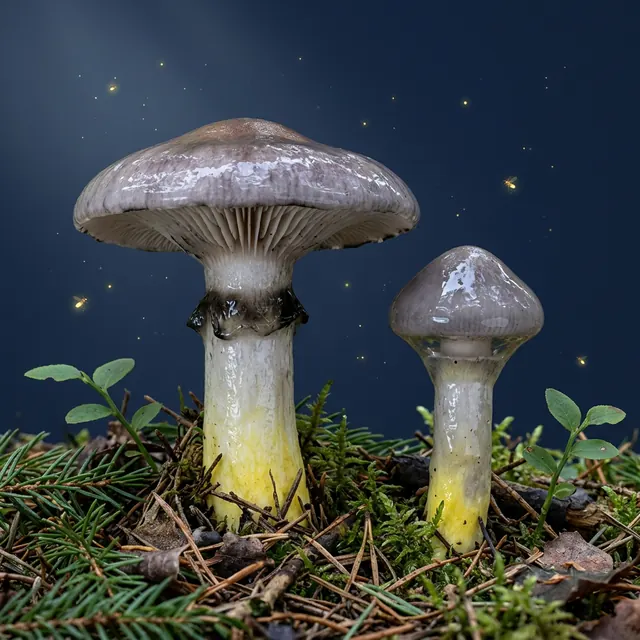
Slimy spike-cap
Gomphidius glutinosus
Polish folk names: klejówka kleista, klejówka śluzowata, czop, klejak, ślimak, tłuścioch
How to recognise
- Cap 4–15 cm, smooth and covered with slime; violet-grey when young, then chocolate-brown, finally ochre; margin inrolled.
- Gills sparse, of different lengths, decurrent, whitish, then darker; spore print black.
- Stem 2–5 cm tall and up to 3 cm thick, slippery, whitish, yellow below, with a fading, slimy ring.
- Flesh whitish, brownish under the cap, lemon-coloured at the stem base; taste mild.
Where and when it grows
Coniferous and mixed forests, almost exclusively under spruces, on acidic soils, often among bilberries; more common in the mountains. From July to November; rare in Poland.
JanFebMarAprMayJunJulAugSepOctNovDec
Most often under: spruce.
Beware of the lookalike
Copper spike-cap. Klejek has a copper-brown cap, orange-yellow flesh and grows under pine or fir. Klejówka has whitish flesh and thick slime on the cap.
In the kitchen
Before preparing, remove the thick slimy skin from the cap, because in some people it can cause vomiting or diarrhea. Very good for pickling in vinegar and for drying.
Good to know
On the Red List of Plants and Fungi of Poland it has status R (rare, potentially threatened).
Frequently asked questions
Is slimy spike-cap edible?
Yes, slimy spike-cap is an edible mushroom.
When does slimy spike-cap grow?
July – November. Coniferous and mixed forests, almost exclusively under spruces, on acidic soils, often among bilberries; more common in the mountains. From July to November; rare in Poland.
Slimy spike-cap: what is it easily confused with?
Most often with the species Copper spike-cap. Klejek has a copper-brown cap, orange-yellow flesh and grows under pine or fir. Klejówka has whitish flesh and thick slime on the cap.