

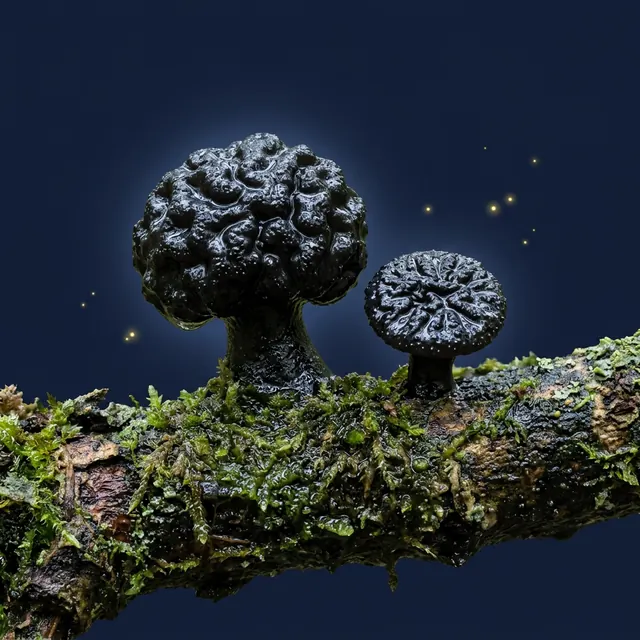
Exidia glandulosa
Exidia glandulosa
Polish folk names: wypotek przecięty, kisielec trzoneczkowy
How to recognise
- Fruiting body 2–9 cm across, disc-shaped, cup-shaped or goblet-shaped, gelatinous.
- Upper side black or brownish-black, shiny, finely warted, folded with age.
- Short, conical little stalk; the sides of the fruiting body do not grow onto the wood.
- Grows singly or in groups, the fruiting bodies usually do not fuse with one another.
Up close
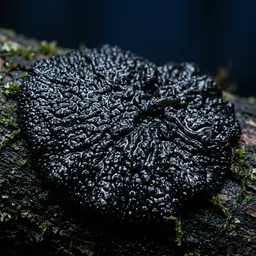 czarna galareta
Upper side
A shiny, black, finely warty surface on which the spores are produced.
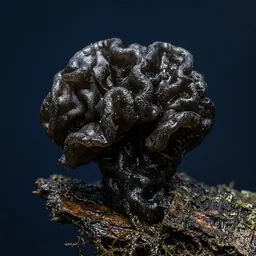 disc on a little stalk
Shape
A gelatinous disc or little cup, solitary, not merging with its neighbours.
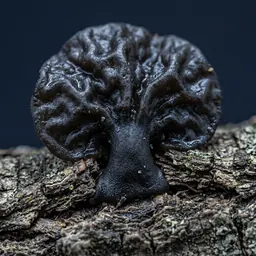 short stalk
Attachment to wood
Attached to the bark by a short, conical stalk; the sides are free.
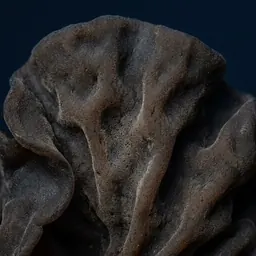 matowy
Underside of the fruiting body
Underside matt, slightly paler, sterile.
The close-ups are AI illustrations. Any doubt is settled by a mycologist or herbalist, not by a photo.
Where and when it grows
Fallen branches, stumps and fallen trunks of oaks, less often lindens, in deciduous and mixed forests and parks. All year round, most often from November to April.
JanFebMarAprMayJunJulAugSepOctNovDec
Most often under: oak, less often linden (fallen branches, stumps).
Beware of the lookalike
Kisielnica czarniawa. Kisielnica czarniawa is folded like a brain, has no stalk, grows attached by its sides and spreads into a black mass.
Good to know
Wikipedia gives it as rare (Red List, status R), and grzyby.pl, under the name Exidia truncata, as fairly frequent in the lowlands in places with old oaks.
Frequently asked questions
Is exidia glandulosa edible?
No, exidia glandulosa is inedible. Wikipedia gives it as rare (Red List, status R), and grzyby.pl, under the name Exidia truncata, as fairly frequent in the lowlands in places with old oaks.
When does exidia glandulosa grow?
January – December. Fallen branches, stumps and fallen trunks of oaks, less often lindens, in deciduous and mixed forests and parks. All year round, most often from November to April.
Exidia glandulosa: what is it easily confused with?
Most often with the species Kisielnica czarniawa. Kisielnica czarniawa is folded like a brain, has no stalk, grows attached by its sides and spreads into a black mass.