

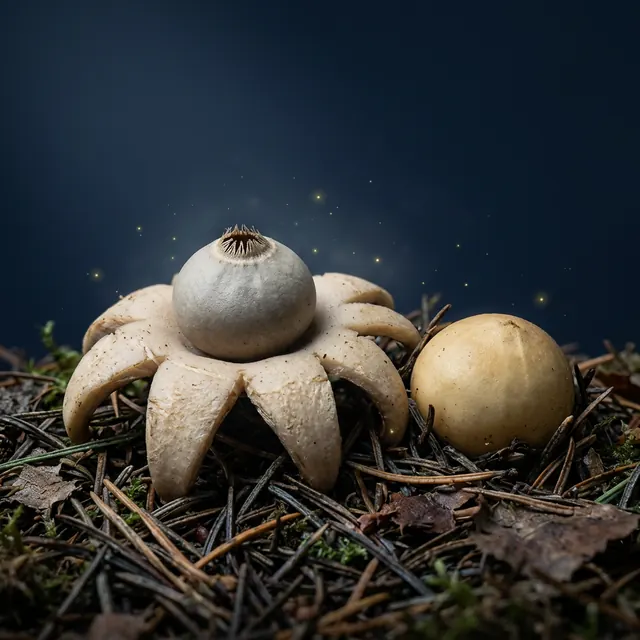
Fringed earthstar
Geastrum fimbriatum
How to recognise
- Young fruiting body spherical, up to 2 cm, hidden in the litter.
- The outer layer splits into 7–8 (up to 10) arms that bend downwards; the expanded fruiting body is 2–8 cm.
- Arms fleshy, whitish-ochre to pale ochre; spore ball 1.5–2 cm, sessile, without a stalk.
- Opening at the top flat or slightly raised, fringed; interior grey-brown, powdery.
Up close
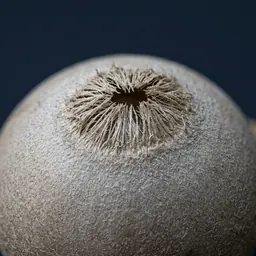 fringe
Opening at the top
A flat, fringed opening without a defined little plate, through which the spores escape.
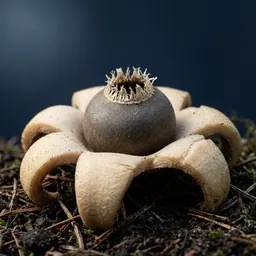 gwiazda
Shape
The ball sits on a star of 7–8 fleshy, beige arms bent downwards.
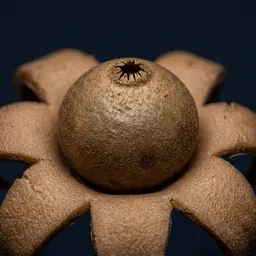 bez szyjki
Base
The spore ball sits directly on the arms, without a stalk or neck.
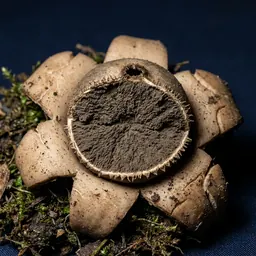 powdery interior
Cross-section
The inside of the ball is greyish-brown, powdery with spores.
The close-ups are AI illustrations. Any doubt is settled by a mycologist or herbalist, not by a photo.
Where and when it grows
Litter in deciduous, coniferous and mixed forests, singly or in groups. From May to November; the most common earthstar in Poland.
JanFebMarAprMayJunJulAugSepOctNovDec
Most often under: deciduous, coniferous and mixed forests (leaf litter).
Beware of the lookalike
Gwiazdosz rudawy. Gwiazdosz rudawy is larger and has reddish arms, rusty with age.
Good to know
Until 2014 it was under strict protection in Poland; it is no longer protected.
Frequently asked questions
Is fringed earthstar edible?
No, fringed earthstar is inedible. Until 2014 it was under strict protection in Poland; it is no longer protected.
When does fringed earthstar grow?
May – November. Litter in deciduous, coniferous and mixed forests, singly or in groups. From May to November; the most common earthstar in Poland.
Fringed earthstar: what is it easily confused with?
Most often with the species Gwiazdosz rudawy. Gwiazdosz rudawy is larger and has reddish arms, rusty with age.