

Stinking russula
Russula foetens
Polish folk names: serojeszka śmierdząca
How to recognise
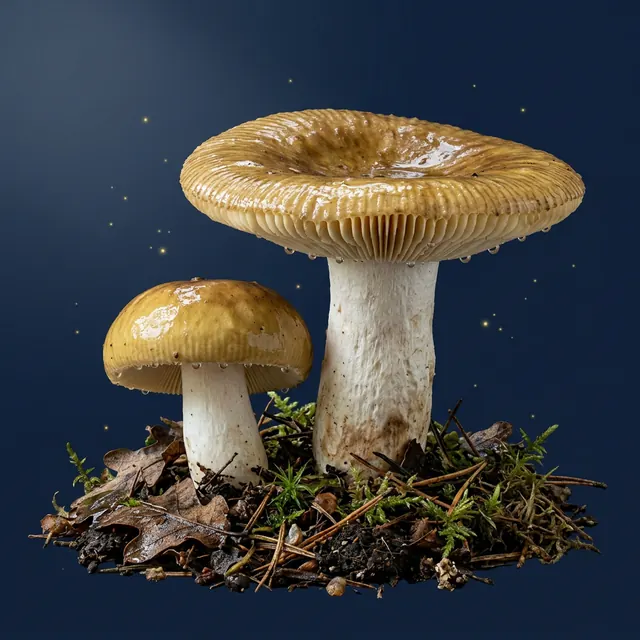
- Cap 7–15 cm, yellow-brown or brownish, slimy when damp, shiny when dry; margin comb-like grooved.
- Gills pale cream-yellowish, later ochre and brown-spotted, often with water droplets in young ones.
- Stem 7–12 cm tall and 2–3.5 cm thick, yellowish-white, rusty-spotted at the base, hollow and chambered with age.
- Flesh white, stiff, with a strong, unpleasant, stifling smell and an acrid taste.
Where and when it grows
Deciduous and coniferous forests, grassy places, roadsides, thickets. From July to September; common in Poland.
JanFebMarAprMayJunJulAugSepOctNovDec
Most often under: various deciduous and coniferous trees.
Beware of the lookalike
Gołąbek niemiły. The gołąbek niemiły is smaller, grows only in deciduous forests, smells weaker, slightly fruity, and is less acrid.
Good to know
Inedible because of its acrid taste and unpleasant smell, but not poisonous. In Russia it is sometimes pickled after soaking for several days.
Frequently asked questions
Is stinking russula edible?
No, stinking russula is inedible. Inedible because of its acrid taste and unpleasant smell, but not poisonous. In Russia it is sometimes pickled after soaking for several days.
When does stinking russula grow?
July – September. Deciduous and coniferous forests, grassy places, roadsides, thickets. From July to September; common in Poland.
Stinking russula: what is it easily confused with?
Most often with the species Gołąbek niemiły. The gołąbek niemiły is smaller, grows only in deciduous forests, smells weaker, slightly fruity, and is less acrid.