

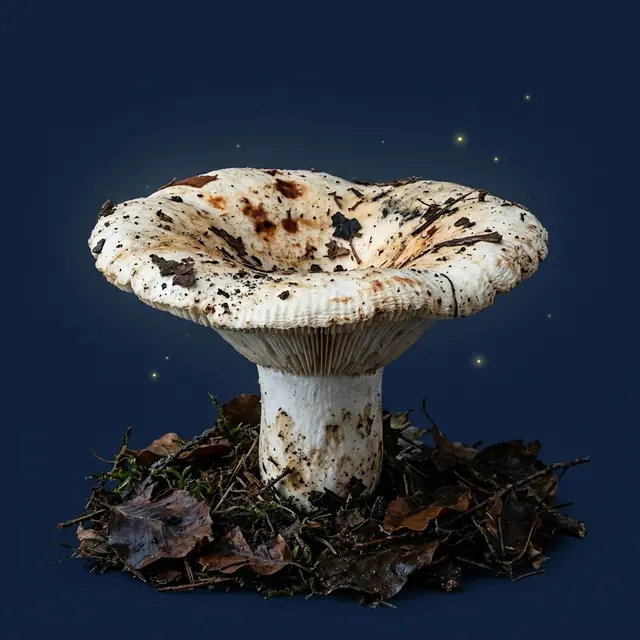
The flirt
Russula delica
Polish folk names: biały gołąbek
How to recognise
- Cap 6–16 cm, whitish, with brown spots with age, funnel-shaped (concave) early on.
- Often grows partly underground, so soil and leaf litter stay on the cap.
- Gills white to cream, crowded, sometimes greenish near the stem.
- Flesh white, hard but brittle like in brittlegills, without milk.
Where and when it grows
Deciduous, coniferous and mixed forests, especially beech woods. Fairly common in Poland, from July to October.
JanFebMarAprMayJunJulAugSepOctNovDec
Most often under: deciduous, coniferous and mixed forests, especially beech forests.
Beware of the lookalike
Lactifluus vellereus. The fleecy milkcap, when broken, releases white milk and has a suede-like cap. The white brittlegill has no milk, and its flesh is brittle.
In the kitchen
Best stewed or fried with other mushrooms; on its own it can be bland. Pick young, firm fruiting bodies.
Good to know
Edible, but despite its name it tastes average and is often wormy. It resembles milk-caps, which are inedible: you can tell it apart by the lack of milk.
Frequently asked questions
Is the flirt edible?
Yes, the flirt is an edible mushroom.
When does the flirt grow?
July – October. Deciduous, coniferous and mixed forests, especially beech woods. Fairly common in Poland, from July to October.
The flirt: what is it easily confused with?
Most often with the species Lactifluus vellereus. The fleecy milkcap, when broken, releases white milk and has a suede-like cap. The white brittlegill has no milk, and its flesh is brittle.