

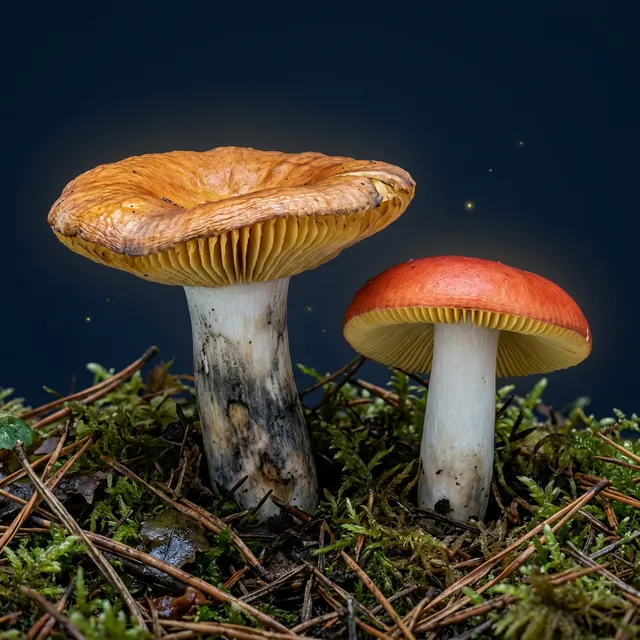
Copper brittlegill
Russula decolorans
How to recognise
- Cap 5–12 cm, almost spherical at first, orange or brick-red, fading to ochre with age.
- Gills dense, white, then butter-yellow; damaged ones turn grey, old ones turn black.
- Stem 2–8 cm tall and 1–3 cm thick, white, dark grey to blackish in old ones.
- Flesh whitish, grey to black when cut; taste mild, no smell.
Up close
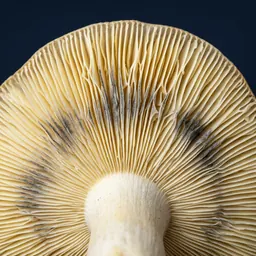 butter-coloured gills
Underside of the cap
Gills white, then butter-yellow; turn grey when damaged.
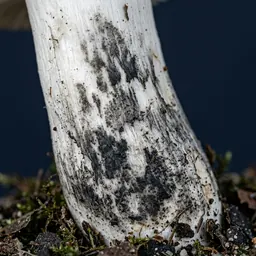 szarzeje
Stem
White stem that turns grey to blackish with age and when touched.
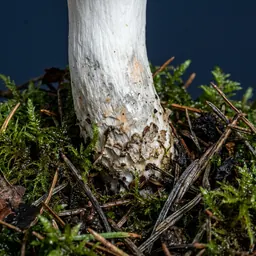 w mchu
Base of the stem
Grows in damp moss in pine forests on acidic soil.
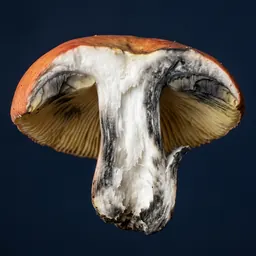 turns grey, then black
Cross-section
Flesh whitish, turns grey when cut, and then black.
The close-ups are AI illustrations. Any doubt is settled by a mycologist or herbalist, not by a photo.
Where and when it grows
Waterlogged and acidic soils in coniferous forests, especially sandy ones. From July to October; common in Poland.
JanFebMarAprMayJunJulAugSepOctNovDec
Most often under: pine, spruce (damp pine forests).
Beware of the lookalike
Russula paludosa. Gołąbek błotny has a similar cap, but its flesh does not turn grey or black when broken.
In the kitchen
A tasty russula. Fry in butter for 10–15 minutes or stew with onion; the darkening of the flesh is natural.
Frequently asked questions
Is copper brittlegill edible?
Yes, copper brittlegill is an edible mushroom.
When does copper brittlegill grow?
July – October. Waterlogged and acidic soils in coniferous forests, especially sandy ones. From July to October; common in Poland.
Copper brittlegill: what is it easily confused with?
Most often with the species Russula paludosa. Gołąbek błotny has a similar cap, but its flesh does not turn grey or black when broken.