

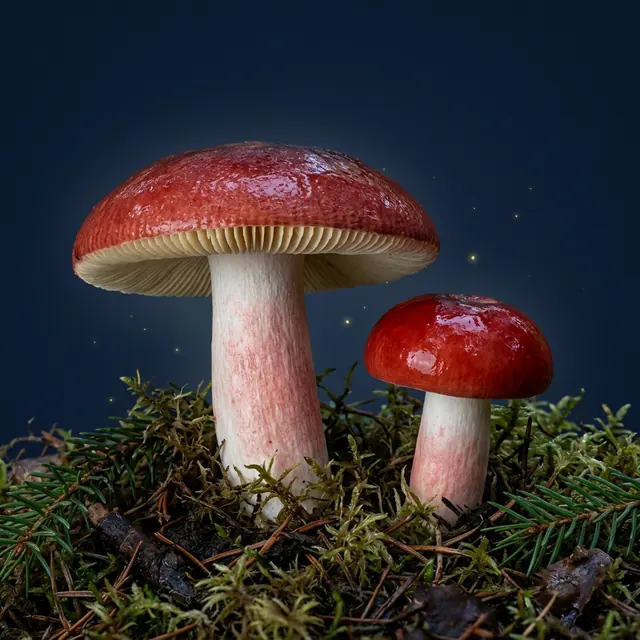
Russula paludosa
Russula paludosa
How to recognise
- Cap 10–15 cm, shiny and sticky, brick-red or blood-red, sometimes purple, occasionally ochre-orange.
- Gills white for a long time, then butter-yellow, sometimes reddish on the edges.
- Stem 7–15 cm tall and 2.5–5.5 cm thick, white, sometimes with a red bloom.
- Flesh white, brittle, does not change colour, no smell, mild taste.
Up close
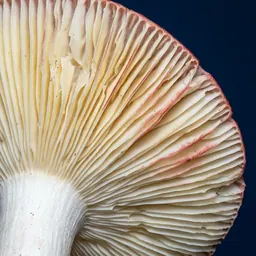 white gills
Underside of the cap
Gills white for a long time, then butter-yellow, sometimes with a reddish edge.
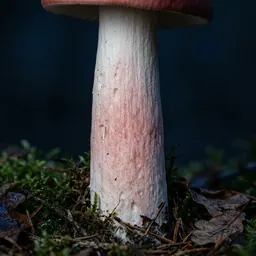 czerwony nalot
Stem
Tall, thick, white stem, often with a pinkish-red bloom.
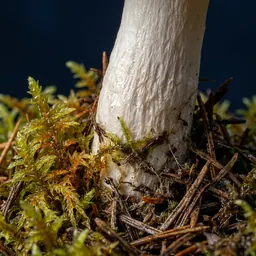 w mchu
Base of the stem
Stem equally thick right down to the ground; grows in wet moss and sphagnum.
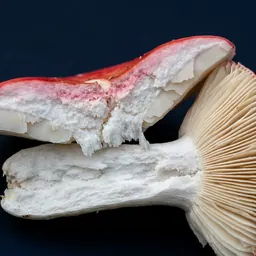 white, brittle
Cross-section
Flesh white, brittle, does not change colour; breaks like chalk.
The close-ups are AI illustrations. Any doubt is settled by a mycologist or herbalist, not by a photo.
Where and when it grows
Boggy, damp coniferous forests, spruce and pine, even peat bogs, on acidic soils. From summer to autumn; common in Poland, locally abundant.
JanFebMarAprMayJunJulAugSepOctNovDec
Most often under: spruce, pine (wet pine forests).
Beware of the lookalike
The sickener. It looks very similar, but a piece of gill in the mouth is very burning. Gołąbek błotny has a mild taste (always spit out the sample).
Feature-by-feature comparison: Russula paludosa or The sickener?
In the kitchen
Tasty. Fry in butter for 10–15 minutes or add to a sauce; remove the sticky skin from the cap.
Frequently asked questions
Is russula paludosa edible?
Yes, russula paludosa is an edible mushroom.
When does russula paludosa grow?
July – October. Boggy, damp coniferous forests, spruce and pine, even peat bogs, on acidic soils. From summer to autumn; common in Poland, locally abundant.
Russula paludosa: what is it easily confused with?
Most often with the species The sickener. It looks very similar, but a piece of gill in the mouth is very burning. Gołąbek błotny has a mild taste (always spit out the sample).