

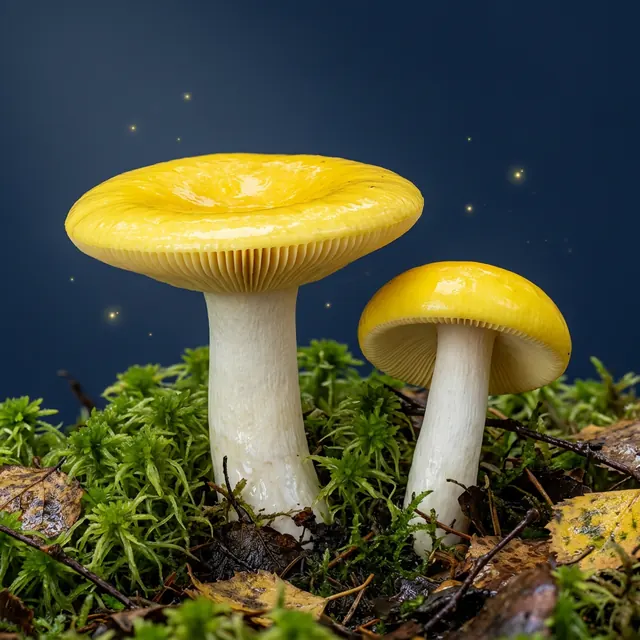
Yellow swamp russula
Russula claroflava
How to recognise
- Cap 5–10 cm, shiny, uniformly lemon-yellow to chrome-yellow.
- Gills thick, rather sparse, white, later yellow-ochre; spore print ochre.
- Stem 4–7 cm tall and 1.5–2.5 cm thick, white, turns grey when touched.
- Flesh white, turns blackish-grey when cut; taste mild, sweetish.
Where and when it grows
Damp deciduous forests with birch, wet birch woods, peat bogs. From June to October; fairly common in Poland.
JanFebMarAprMayJunJulAugSepOctNovDec
Most often under: birch (wet places, peat bogs).
Beware of the lookalike
Geranium brittlegill. The geranium brittlegill has a burning taste. The ochre brittlegill does not turn grey when cut and grows in coniferous forests.
In the kitchen
Edible. Fry or stew after cleaning, always well boiled or fried.
Frequently asked questions
Is yellow swamp russula edible?
Yes, yellow swamp russula is an edible mushroom.
When does yellow swamp russula grow?
June – October. Damp deciduous forests with birch, wet birch woods, peat bogs. From June to October; fairly common in Poland.
Yellow swamp russula: what is it easily confused with?
Most often with the species Geranium brittlegill. The geranium brittlegill has a burning taste. The ochre brittlegill does not turn grey when cut and grows in coniferous forests.