

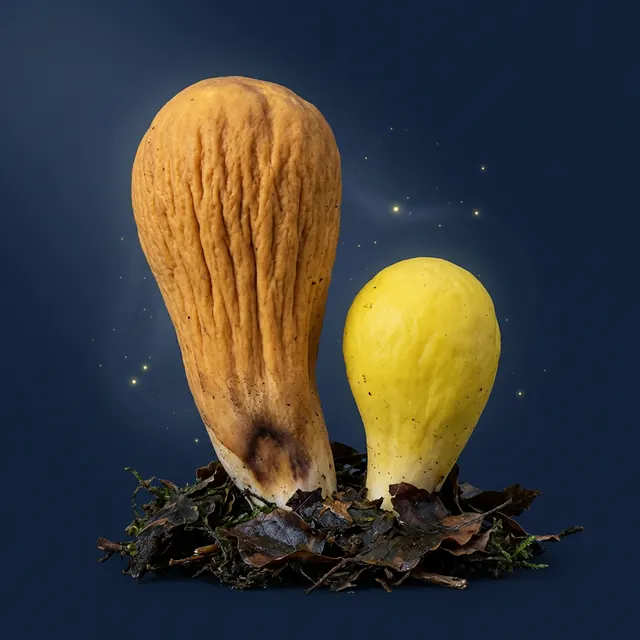
Giant club
Clavariadelphus pistillaris
Partially protected species
Polish folk names: goździeniec pałkowaty, goździeniec pałka, buławnik pałeczkowaty
How to recognise
- Fruiting body club-shaped, 7–20 cm tall and 2–7 cm thick, with a bluntly rounded top.
- Surface smooth, later longitudinally wrinkled; lemon yellow when young, then ochre-rusty to ochre-brown.
- Turns brownish or wine-brownish when touched; base narrowed, paler.
- Flesh whitish, brown-purple in cross-section, slightly bitter.
Up close
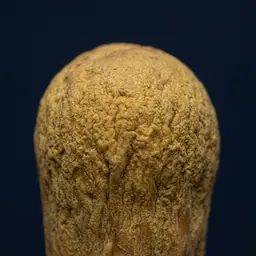 bluntly rounded
Apex
The tip of the club is bluntly rounded, not truncated and not concave.
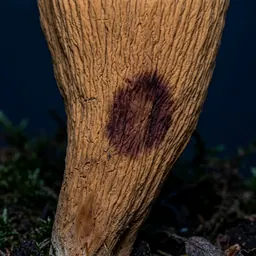 pomarszczona
Surface
Smooth, lengthwise wrinkled with age, yellow to ochre-brown; spores are produced over the whole surface.
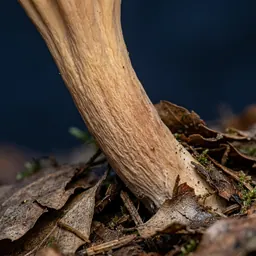 narrowed, pale
Base
Base narrowed and paler; the fruiting body turns brown when touched.
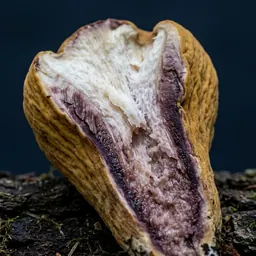 purpurowieje
Cross-section
Flesh whitish, turns brown-purple when cut.
The close-ups are AI illustrations. Any doubt is settled by a mycologist or herbalist, not by a photo.
Where and when it grows
A terrestrial mycorrhizal fungus, mainly with beech, in deciduous forests on limestone soils. From July to November, singly or in groups. Over 50 sites in Poland; Red List: V (vulnerable).
JanFebMarAprMayJunJulAugSepOctNovDec
Most often under: beech (deciduous forests on limestone).
Beware of the lookalike
Buławka obcięta. Buławka obcięta grows in coniferous forests and has a flat-cut or concave top.
Good to know
Inedible because of its bitter taste.
Frequently asked questions
Is giant club edible?
No, giant club is inedible. Inedible because of its bitter taste.
When does giant club grow?
July – November. A terrestrial mycorrhizal fungus, mainly with beech, in deciduous forests on limestone soils. From July to November, singly or in groups. Over 50 sites in Poland; Red List: V (vulnerable).
Giant club: what is it easily confused with?
Most often with the species Buławka obcięta. Buławka obcięta grows in coniferous forests and has a flat-cut or concave top.