

Shaggy bracket
Inonotus hispidus
Polish folk names: włóknouszek szczotkowaty
How to recognise
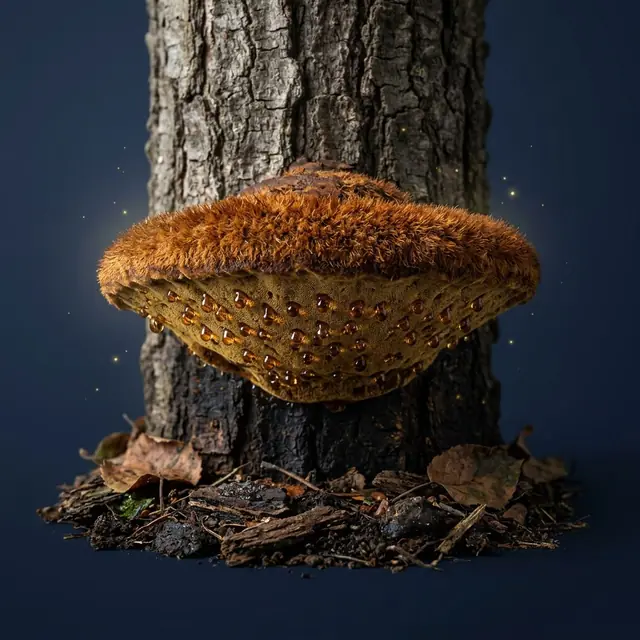
- Semicircular fruiting body, thick, 10–30 cm wide, solitary or overlapping like roof tiles.
- Top covered with dense, stiff hairs, rusty orange, later dark brown to black.
- When young it exudes amber drops of liquid on the edge and pores.
- Pores small, yellowish-brown, shiny against the light; flesh spongy, rusty.
Where and when it grows
On trunks and boughs of living deciduous trees, most often apple, less often walnut, ash and mulberry. From June to November. Uncommon in Poland.
JanFebMarAprMayJunJulAugSepOctNovDec
Most often under: living deciduous trees, most often apple trees, also walnuts, ashes and mulberries.
Beware of the lookalike
Beefsteak fungus. The beefsteak fungus grows on oaks, is blood-red, smooth and juicy like meat. The shaggy bracket is hairy, rusty and grows mainly on apple trees.
Good to know
Inedible: hard and woody. A tree parasite, it weakens the boughs of orchard apple trees. In Poland it is on the Red List as a rare species. In China it is studied as a medicinal fungus.
Frequently asked questions
Is shaggy bracket edible?
No, shaggy bracket is inedible. Inedible: hard and woody. A tree parasite, it weakens the boughs of orchard apple trees. In Poland it is on the Red List as a rare species. In China it is studied as a medicinal fungus.
When does shaggy bracket grow?
June – November. On trunks and boughs of living deciduous trees, most often apple, less often walnut, ash and mulberry. From June to November. Uncommon in Poland.
Shaggy bracket: what is it easily confused with?
Most often with the species Beefsteak fungus. The beefsteak fungus grows on oaks, is blood-red, smooth and juicy like meat. The shaggy bracket is hairy, rusty and grows mainly on apple trees.