

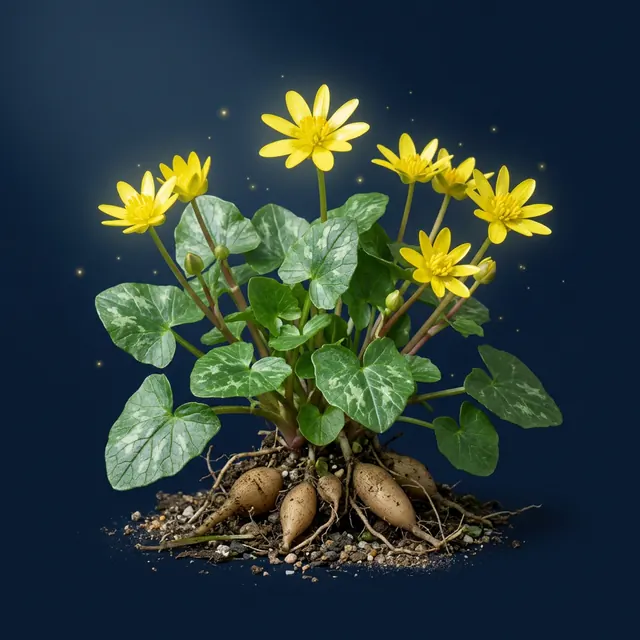
Lesser celandine
Ficaria verna Huds. (syn. Ranunculus ficaria L.)
Polish folk names: jaskier ziarnopłon, Herba Ficariae
Symptoms of poisoning
The sap irritates the skin and eyes: redness, pain, blisters, ulcers, severe conjunctivitis. After eating the flowering plant: burning in the mouth, nausea, vomiting, diarrhoea. Acute toxic hepatitis with jaundice has been described after about 10 days of drinking a lesser celandine extract “for haemorrhoids”.
What it looks like
Low early-spring perennial (March–May), 3–20 cm, with club-shaped root tubers. Leaves heart- or kidney-shaped, fleshy, hairless, glossy, dark green, often blotched, on long stalks. Flowers solitary, 1.3–3 cm, with 3 greenish sepals and usually 8 shiny yellow petals. After flowering, whitish bulbils the size of a grain appear in the leaf axils. The plant disappears in summer.
What it is sometimes confused with
- marsh-marigold (kingcup) – larger, also shiny leaves and yellow flowers, but 5 petals; also poisonous
- yellow wood anemone – yellow flowers in the forest in spring, but palmately divided leaves; poisonous
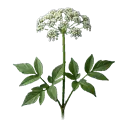
- ground elder and wild garlic – gathered in spring in the same floodplain forests; their leaves are completely different
The information is educational and describes traditional use according to EMA/HMPC monographs (the European Medicines Agency and its Committee on Herbal Medicinal Products).It does not replace the advice of a doctor or pharmacist. Never eat a plant you are not 100% sure you recognise.