

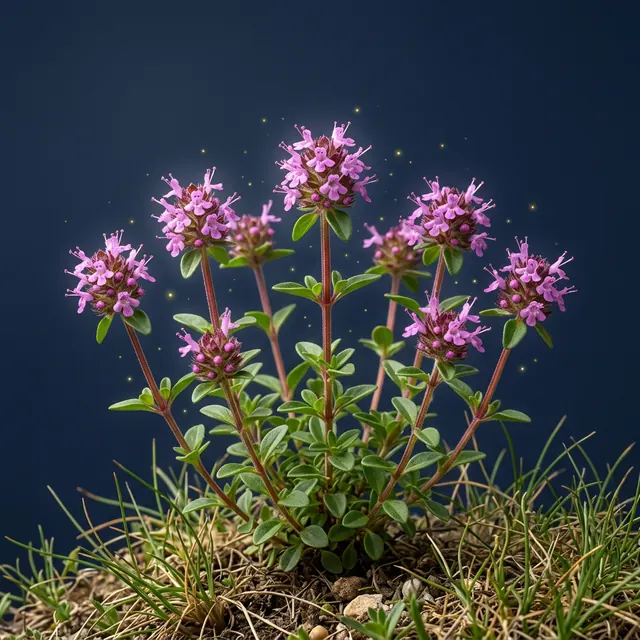
Larger wild thyme
Thymus pulegioides L.
Polish folk names: macierzanka jajowata
Traditional use
In folk medicine the herb (collected at the start of flowering) was an ingredient of cough medicines, as an expectorant and carminative. The essential oil (thymol, carvacrol or other components depending on the chemotype) is antifungal and antibacterial in laboratory studies. Also valued as a seasoning similar to thyme, for fatty dishes, soups, sauces and mushrooms. There is no EMA monograph of its own, and there are no clinical studies.
What it looks like
Low, aromatic subshrub 10–20 cm tall, forming turf-like cushions. Stems upright, sharply four-angled, hairy only on the edges. Leaves 5–10 mm, ovate, entire, almost hairless. Small pink to violet flowers in head-like or elongated inflorescences at the tips of all the shoots.
Harvest
Gathered: herb (aerial parts).
When: June – August.
Form: infusion, spice.
Lookalikes
- breckland thyme – lower, stem rounded and hairy all around; harmless, also medicinal
- pennyroyal – similar pink whorls, but a very toxic oil; grows in wet places
The information is educational and describes traditional use according to EMA/HMPC monographs (the European Medicines Agency and its Committee on Herbal Medicinal Products).It does not replace the advice of a doctor or pharmacist. Never eat a plant you are not 100% sure you recognise.