

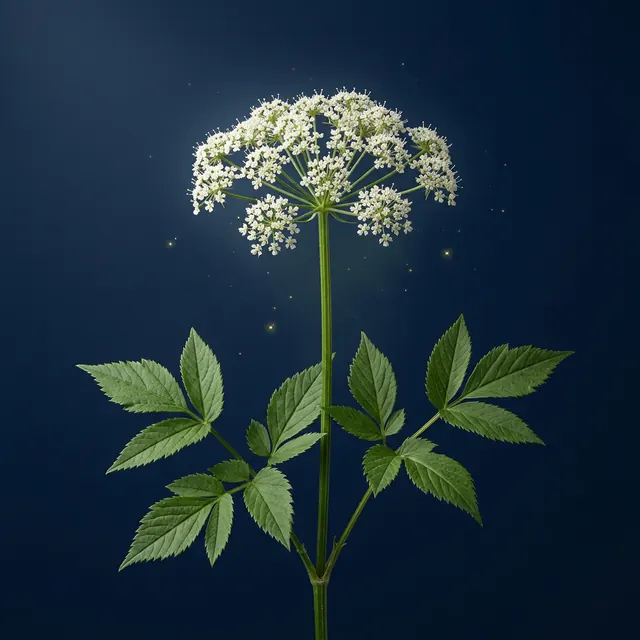
Ground elder
Aegopodium podagraria L.
Traditional use
No EMA monograph. The name comes from podagra, i.e. gout, which the herb was once used to treat; it was also applied to wounds. Its medicinal use was already fading by the early 19th century. It is credited with a weak diuretic, anti-inflammatory and calming action, without confirmation in studies. Above all it is an old vegetable: in medieval Poland it was sold at markets, and in times of famine it was commonly eaten.
What it looks like
Perennial 30–100 cm tall that forms extensive patches thanks to creeping rhizomes. Lower leaves long-stalked, twice ternate (three groups of three leaflets), leaflets ovate, pointed, serrated, unequal. Leaf stalk smooth, triangular in cross-section with a groove. Stem hollow, grooved. White flowers in flat compound umbels without bracts.
Harvest
Gathered: young leaves, leaf stalks.
When: April – June.
Form: kitchen (salad, soup, like spinach), compress.
Lookalikes
- Poison hemlock – DEADLY POISONOUS (coniine); stem bare, bluish, with purple blotches, leaves multiply pinnate with fine lobes, smells of mice when crushed
- Fool's parsley – POISONOUS; leaves similar to parsley, shiny underneath, bracteole leaflets hanging downwards beneath the umbels, garlic smell
- Cowbane – DEADLY POISONOUS, grows by water; leaves 2–3 times pinnate with narrow, sharply toothed segments
- Angelica and garden angelica – large pinnate leaves with swollen sheaths; ground elder has a doubly three-leaflet leaf
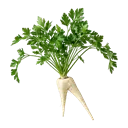
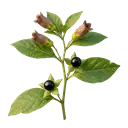
The information is educational and describes traditional use according to EMA/HMPC monographs (the European Medicines Agency and its Committee on Herbal Medicinal Products).It does not replace the advice of a doctor or pharmacist. Never eat a plant you are not 100% sure you recognise.